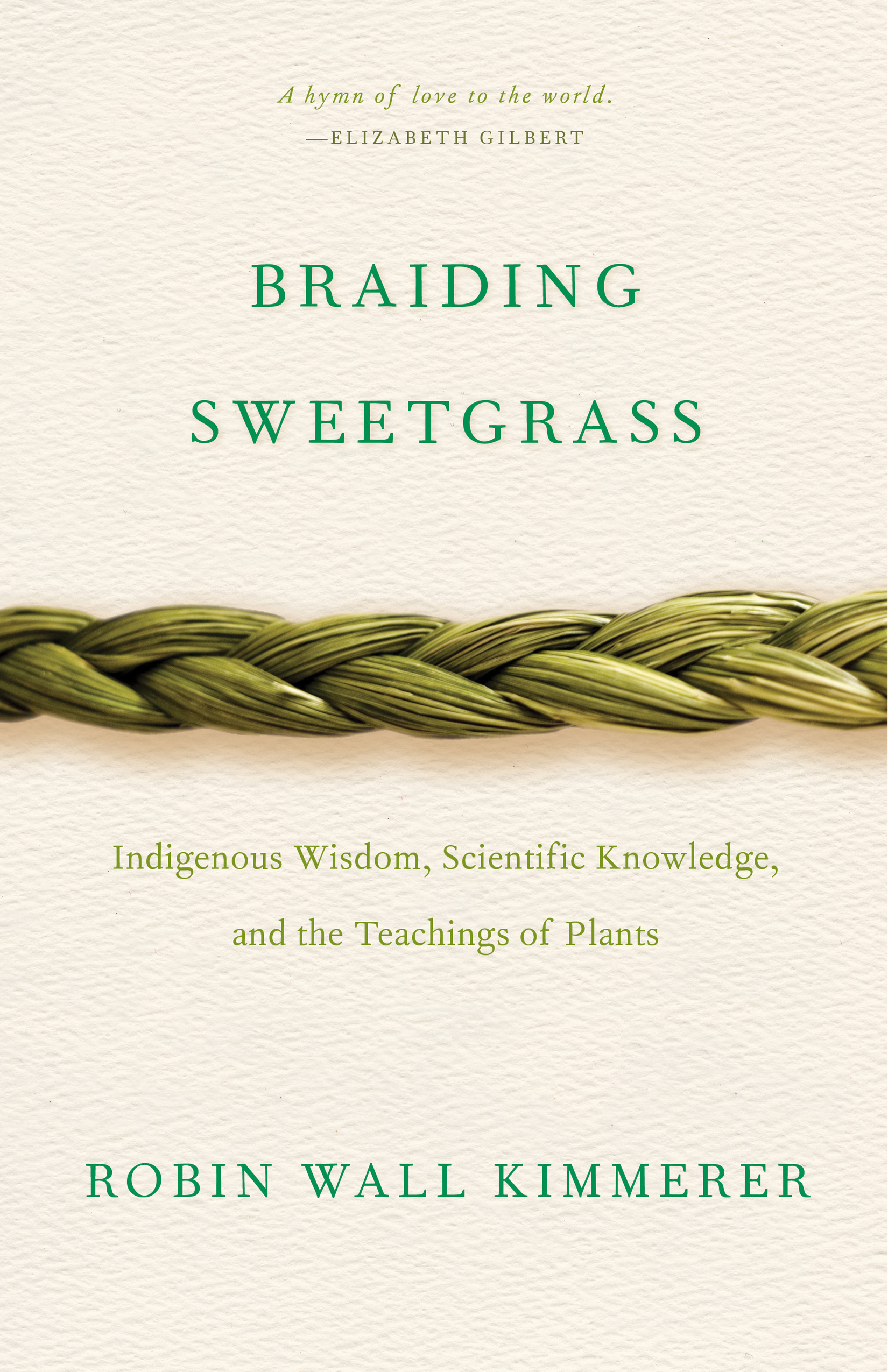
Braiding Sweetgrass: Indigenous Wisdom, Scientific Knowledge and the Teachings of Plants
- First published 2013
- 17 pages
- English
In Braiding Sweetgrass, botanist and Citizen Potawatomi Nation member Robin Wall Kimmerer explores the convergence of Indigenous wisdom and scientific understanding. Drawing from her experiences as a scientist, a mother, and an Indigenous woman, Kimmerer presents a collection of essays that illuminate the natural world. She examines how plants and other living beings offer lessons and gifts, fostering a reciprocal relationship between humanity and the Earth.
Through a blend of ecological science, ancestral teachings, and personal narratives, this book advocates for a deeper ecological consciousness. It encourages readers to recognize the generosity of the Earth and understand their own role in a balanced, interconnected living world.
Through a blend of ecological science, ancestral teachings, and personal narratives, this book advocates for a deeper ecological consciousness. It encourages readers to recognize the generosity of the Earth and understand their own role in a balanced, interconnected living world.
What readers say
4.50
192K ratings across the web 9 in 10 readers loved it
Many readers describe this book as a stunning and eloquent work, praising its poetic and lyrical prose that masterfully intertwines scientific understanding, particularly in botany and ecology, with rich indigenous knowledge and traditions. Reviewers consistently highlight the author's deep love for the land and nature, which shines through her writing, fostering a profound sense of gratitude, reciprocity, and connection to the Earth. The book is lauded for bringing essential indigenous perspectives, often overlooked by academia, to the forefront of scientific discussion, offering a more personal and holistic approach that includes emotions like love and heartbreak as valid forms of knowing. Readers found the insights into plants, animals, and natural phenomena fascinating, noting how the book encourages closer observation of the natural world and inspires a desire to protect it. Its powerful message of hope and its exploration of the sad history of Native Americans resonated deeply, leaving many feeling transformed and activated to engage with environmental issues.
Despite its many strengths, several reviewers found the book to be excessively long and repetitive, with some chapters blending together due to a similar narrative structure. This led to an experience described as a "feat of endurance" for some, who felt the core points were beautifully made early on but then reiterated too frequently. Critics also pointed to a perceived disorganization in the book's overall structure, suggesting it could benefit from significant editing and shortening. A notable concern for some readers was the author's tone, which occasionally came across as preachy or condescending, making them feel guilty about their environmental impact. Furthermore, some indigenous readers and academics raised questions about the author's representation of indigenous oral traditions and her personal experience, suggesting a potential lack of engagement with issues like poverty, racism, or intergenerational trauma, and a tendency to conflate diverse indigenous cultures. Others critiqued the book for relying heavily on symbolic or spiritual solutions to material environmental problems, offering less in the way of pragmatic, systemic advice.
Ultimately, this book is widely regarded as an important, beautiful, and profoundly impactful work, though its execution may not appeal to all. It is highly recommended for nature enthusiasts, environmental activists, and anyone seeking a deeper connection to the Earth and its wisdom. Readers interested in indigenous worldviews, the intersection of science and spirituality, and lyrical, reflective prose will likely find it a transformative experience. However, those who prefer concise narratives, direct solutions to environmental crises, or a less romanticized approach to nature might find it a challenging read. Despite its structural and tonal criticisms, the book offers a unique and powerful call to re-evaluate humanity's relationship with the natural world, emphasizing gratitude, reciprocity, and the enduring lessons from indigenous cultures.
Reviews
No reviews yet. Be the first.
Details & editions
- This edition
- Tantor Audio, 2016
- ISBN
- 9781799983149
- Language
- English
Original edition Braiding Sweetgrass Originally published in 2013 · English · Milkweed Editions