Añadir a biblioteca
Todavía no tienes listas. Crea una en Biblioteca.
Ir a BibliotecaAñadir a biblioteca
Todavía no tienes listas. Crea una en Biblioteca.
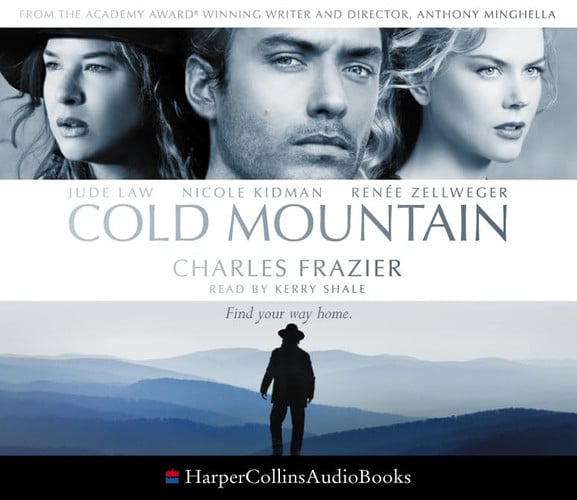
Ir a BibliotecaCold Mountain Film Tie-In
- Idioma
- Inglés
- Publicado en
- Editorial
- HarperCollins
- Páginas
- 3
- ISBN
- 9780007184712
Back on Cold Mountain, Ada Monroe, the love Inman is risking everything to reach, faces her own battle for survival. A minister's daughter raised in the city, she is left alone and unequipped to manage her late father's farm. As she nears starvation, her world is transformed by the arrival of a resourceful drifter named Ruby, who teaches her the rhythms of the land. This novel charts their parallel journeys of endurance and transformation, exploring how love and a connection to a place can sustain the human spirit against the backdrop of a nation in ruins.
Temas
Detalles de la edición original
Otras ediciones (7)
Otras ediciones

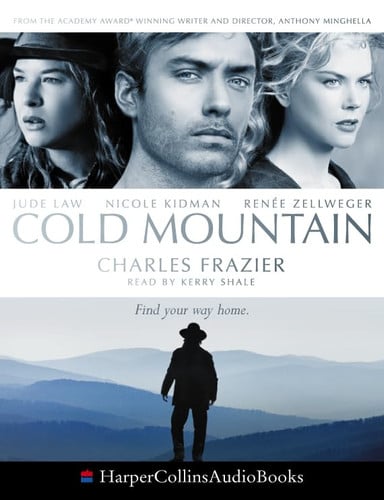
Cold Mountain
2006 • Grove Press
Inglés
Cold Mountain
1998 • Books on Tape
Inglés
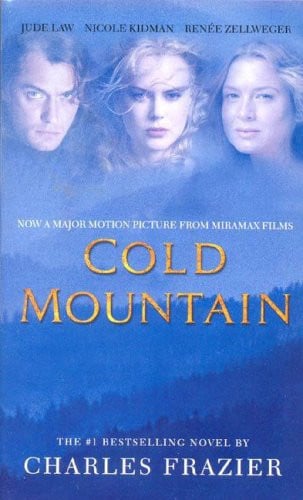
Cold Mountain A Novel
2003 • Vintage Books
Inglés
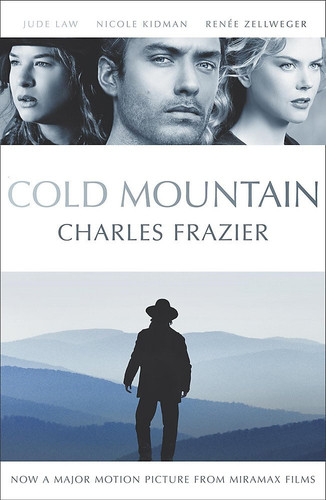
Cold Mountain
2003 • Sceptre
Inglés
Cold Mountain
2003 • Random House Audio
Inglés
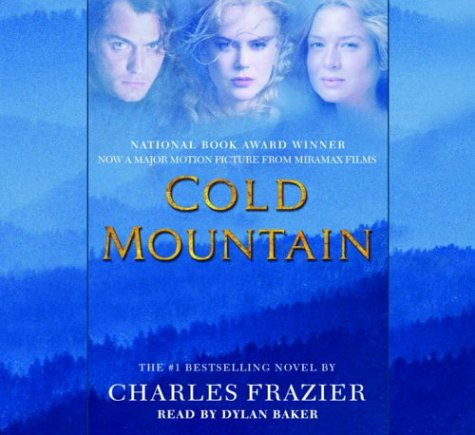
Cold Mountain
2003 • Random House Audio
Inglés

Cold Mountain
2000 • Listening Library
Inglés
Far away in the mountains of Black Cove, Ada Monroe sat on the porch of a house that was now hers alone. Her father, Monroe, was dead, and with him had gone the last buffer between her and a world for which her Charleston upbringing had left her frighteningly unprepared. The garden was a ruin of weeds, the chickens had gone feral, and her larder was nearly bare. Her life, once filled with Latin, piano, and watercolors, had become a study in incompetence. After a humiliating skirmish with a rooster left her scratched and bleeding in the dust, she knew she had reached a new low. A letter from her father's solicitor confirmed her ruin, informing her that the war had reduced her finances to nothing. She was an orphan in a strange, canted land, with no practical skills and no clear path forward but to be consumed by the wild green landscape.
Into this despair walked a girl named Ruby Thewes, a creature as sinewy and practical as Ada was ethereal and lost. Sent by a neighbor, Ruby was short, dark, and corded with muscle, a motherless child who had raised herself in the woods while her father, Stobrod, was off roundering. “I'm not exactly looking to hire out,” Ruby declared, her terms plain. “If I'm to help you here, it's with both us knowing that everybody empties their own night jar.” In a single motion, she snatched up the flogging rooster, wrung its neck, and announced they would stew it for dinner. With that act, a new order began. Ruby moved into an old cabin on the property and commenced a relentless education, teaching Ada the tiring verbs of survival: plow, plant, hoe, cut, can, feed. They bartered away Ada's piano for a sow and sheep, and slowly, through the rhythm of hard work, a partnership formed between the two women, each an alien to the other, yet bound by a shared solitude.
Inman's road was one of exile and brute wandering through a flat, foul country he despised. He walked by night, clubbing away vicious dogs and hiding from the Home Guard. At a crossroads settlement, a brawl over nothing left three men beaten in the road and Inman fleeing into the woods. There he fell in with a disgraced preacher named Veasey, a man whose life was a testament to poor judgment. Together they traveled, a grim pairing of fool and fugitive, their journey marked by bizarre encounters: robbing beehives, wrestling a monstrous catfish from a creek, and a near-fatal run-in with a whore named Big Tildy at a wretched roadside inn. Veasey, with his stolen pistol and talk of becoming a Texan pistoleer, seemed a walking caricature of the world's folly, a constant, chattering reminder of the very chaos Inman sought to escape.
The journey grew darker still. Inman and Veasey were taken in by a man named Junior, whose tilted house and slatternly women seemed a vision of some backwoods hell. It was a trap. Junior turned them over to the Home Guard for a bounty, and they were roped to a line of other outliers and deserters. After days of marching east, away from home, the guards led them into the pinewoods one night and executed them in a shallow grave. Inman, struck by a bullet that had already passed through Veasey, was only grazed and left for dead. He clawed his way from the dirt and, after freeing himself, turned his face west once more, his head ringing with a new wound, his heart hollowed out. He was found near collapse by a yellow slave who hid him in a hayloft for days, nursing him with pork and corn pone before drawing him a map north, a safer route along the foot of the Blue Ridge.
Back in Black Cove, autumn painted the mountainsides in strokes of red and yellow. Ada and Ruby worked, their days falling into a rhythm of harvesting apples, drying tobacco, and preparing for winter. One evening, Stobrod appeared at their fire, a wraith returned from the war, accompanied by a simpleminded boy named Pangle. Stobrod, long a wastrel, had undergone a strange transformation; he now carried a fiddle of his own making and played music of heartbreaking beauty. He and Pangle were outliers, living in a cave with others, but Stobrod feared their leader, a man who preached a gospel of violent retribution. He asked for help, a place to hide, but Ruby, whose childhood he had abandoned, turned him away with a bitter tongue. “Eat roots,” she told him. “Drink muddy water. Sleep in a hollow log.”
Inman, following the new northward path, climbed into the high mountains. Starving and weak, he was found by an old goatwoman, a hermit who had lived alone in a caravan for twenty-seven years. She fed him, salved his wounds with a black grease of bitter herbs, and gave him laudanum. She spoke of a world where God's mercy was evident in the mind's inability to recall the sharpest details of pain. Inman, though, could not forget. He dreamed of a life transformed into that of a bear, roaming the green mountains in peace. But even that dream ended in violence. After leaving her, he finally reached a high scarp and looked out across the waves of mountains. There, thin and quick as a pen stroke against the horizon, was the unmistakable shape of Cold Mountain. It was his place. He had achieved a vista of homeland, and a growing joy filled him.
Snow fell as Ada and Ruby climbed the mountain, following the directions of a terrified Georgia boy who had brought them news: Stobrod and Pangle had been shot by the Home Guard. They found Pangle dead beneath a great poplar, a grin still frozen on his face. But Stobrod was gone. They buried the boy and were about to turn for home when Ada found Stobrod under a rock ledge, shot through but still breathing. They carried him to a deserted Cherokee village deep in a cove and nursed him. The next day, Ada went hunting in the snow and, to her own amazement, killed two turkeys. As she stood over them, a figure emerged from the falling snow at the far end of a lane of chestnut trees. A man, ragged and thin, holding a great, ugly pistol. When he spoke her name, she knew him. It was Inman.
They spent three days in the ghost village, a pocket of impossible peace. Inman and Ada lay together on a bed of hemlock boughs, their bodies finally touching, their pasts unspooling in the firelight. They spoke of a future - a sawmill, bird dogs, growing old together. It was a fragile plan, contingent on his survival. He would cross the mountains and surrender to the Federals, wait out the war's end, and then return. When the time came to part, Ada and Ruby left first, leading a healing Stobrod. Inman followed later, but as he descended through a laurel thicket, he met Teague and the Guard on the trail. The world collapsed into a blur of gunfire, rearing horses, and the stark clarity of killing. Inman fought with the grim efficiency of a man who had done nothing else for four years, until only he and a white-haired boy remained. They faced each other in the snow, and in the final exchange of shots, Inman fell.
Ten years later, Ada stood under the pear tree, setting the table for an autumn picnic. The war was a distant memory. The farm at Black Cove thrived. Ruby had married the Georgia boy, and their three sons wrestled in the yard. Stobrod, scarred but alive, played his fiddle by the fire. Ada's daughter, a girl of nine with dark hair and her father's eyes, ran laughing through the field. Life had gone on. She looked toward Cold Mountain, a mottle of color against the sky, and felt the quiet pull of a satisfied mind, a peace carved from the heart of naught and grief.
Aún no hay discusiones sobre este libro.
Eliminar discusión
¿Seguro que quieres borrar esta discusión? Esta acción no se puede deshacer.
Rating Sources
Reviewers widely praise Cold Mountain as a beautifully written and profound literary work, often described as an American epic akin to Homer's Odyssey or Dante's Inferno. Many highlight the lyrical, poetic prose and evocative descriptions of the natural landscape, particularly the Blue Ridge Mountains, and the Civil War era. The novel is commended for its rich symbolism, literary allusions, and its ability to immerse readers in the historical setting. The dual narrative following Inman's arduous journey home and Ada's challenging transformation on the farm is found compelling, showcasing themes of love, resilience, honor, devotion, and survival. Readers appreciate the well-developed and authentic characters, the exploration of war's impact on ordinary lives, and the solace characters find in literature and music amidst hardship. The story is seen as an unsentimental portrayal of quiet longing, endurance, and personal growth.
Despite its acclaimed literary qualities, several reviewers found the book to be a demanding read due to its exceptionally slow pace and extensive, often perceived as excessive, descriptive passages. Some critics felt the prose was overly wordy and heavy, leading to a narrative that could be dull, unexciting, or difficult to remain motivated to read, sometimes comparing it to a rich meal that can only be consumed in small portions. A specific stylistic point of contention for some was the author's choice to omit traditional quotation marks for dialogue. Others felt the writing was overly intellectualized, making it hard to emotionally connect with the characters or suggesting the author was more interested in demonstrating literary skill than crafting a gripping story. Additionally, some readers questioned the depth of the initial romantic connection between the main characters, while a few found its portrayal of the Southern experience problematic.
Ultimately, Cold Mountain is regarded by many as a significant work of American fiction, offering a deep and immersive experience for those willing to commit to its unique style. It is a book that demands patience and attention, but frequently rewards readers with its profound themes and masterful writing. This novel is highly recommended for those who appreciate literary historical fiction, particularly stories set in the Civil War era, and who enjoy slow-paced, introspective narratives rich in natural description and classical allusions. It appeals to readers seeking a character-driven journey of survival, transformation, and the enduring human spirit, rather than a fast-paced adventure. However, readers who prefer quick plots, straightforward prose, or less descriptive storytelling may find it challenging.
Aún no hay reseñas. ¡Sé el primero en opinar!
Eliminar reseña
¿Seguro que quieres borrar esta reseña? Esta acción no se puede deshacer.