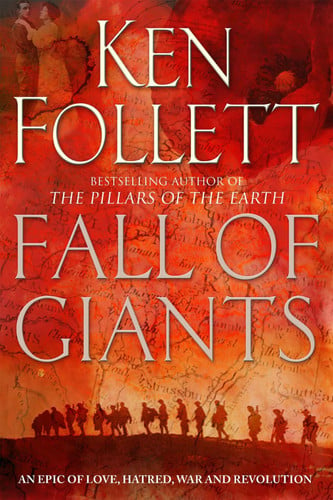
Positives Ken Follett's Fall of Giants is widely praised as a captivating and immersive historical epic, drawing readers into the tumultuous early 20th century. Many reviewers commend its ambitious scope, skillfully intertwining the lives of five interconnected families from various nationalities and social strata with major historical events like World War I, the Russian Revolution, and the fight for women's suffrage. The book is lauded for its fluid, fast-paced storytelling, making its considerable length feel manageable and engaging. Readers appreciate the meticulous historical research, which provides a multi-dimensional view of the era and helps to contextualize complex political and social changes. The narrative's ability to foster understanding of why these monumental events occurred, often from diverse perspectives, is a frequently highlighted positive, creating an experience akin to watching a compelling period drama.
Negatives However, the book also faces criticism, particularly regarding its character development and literary style. Some reviewers found the numerous characters to be one-dimensional, lacking psychological depth or nuance, and communicating in a stiff, unnatural manner. The plot is sometimes described as overly reliant on convenient coincidences to connect characters, stretching believability. While the historical detail is appreciated, a segment of readers felt the prose could be didactic, with dialogue often serving as a vehicle for historical exposition rather than authentic conversation. The portrayal of social classes is also a point of contention, with some finding the upper classes to be caricatured villains and the lower classes idealized. Additionally, sections detailing battlefield events, while informative, were occasionally seen as tedious, and some felt the historical interpretation leaned too heavily on popular modern perceptions rather than a more balanced scholarly view.
Conclusion Despite these noted shortcomings, Fall of Giants is generally regarded as a highly readable and entertaining novel. Its sheer scope and ability to weave personal stories into grand historical tapestries make it a rewarding experience for many. This book is particularly recommended for readers fascinated by 20th-century history, especially World War I and the Russian Revolution, who enjoy extensive multi-generational family sagas. It appeals to those who prioritize engaging historical narratives and broad overviews of significant events over deep character studies or highly literary prose. If you appreciate a story that immerses you in a past era and encourages a deeper understanding of historical forces, while being willing to overlook some predictability or didactic elements, this epic is likely to hold your attention.