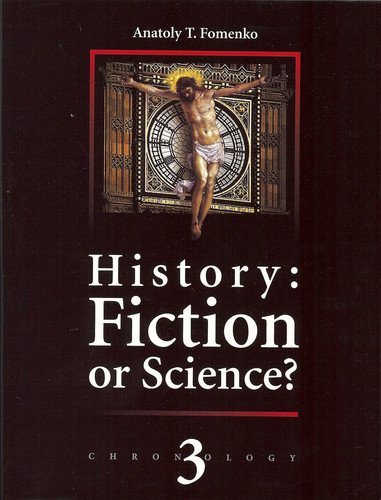
Positives The reviews indicate that the book is informative in demonstrating the full extent of the author's alternative historical theories. It presents a core argument suggesting that regnal lists from different historical periods exhibit too many similarities to be coincidental, proposing they are duplicates of the same underlying events or figures. This central proposition is acknowledged as sounding logical and being a testable theory, offering a unique perspective for readers interested in unconventional historical approaches.
Negatives However, the book faces severe criticism for its academic rigor and factual accuracy. Reviewers highlight extensive historical inaccuracies, including the distortion or fabrication of dates, regnal lengths, and the roles of historical figures to force parallels. Comparisons between different emperors and periods are frequently described as either hopelessly vague or achieved by manipulating evidence, changing the order of events, or omitting crucial historical context. The book's methodology is also heavily critiqued for a lack of transparency, an outdated and confusing referencing system that makes verification difficult, and an apparent nationalistic bias influencing its interpretations. Critics argue that the author's arguments are built on self-invented numbers and forced associations rather than genuine historical data, leading to a significant loss of years and a fundamentally flawed premise.
Conclusion In conclusion, the book is largely presented as a work of pseudo-history, with its central thesis undermined by widespread factual errors and a highly questionable methodology. While the process of critiquing such a work might be considered amusing by some, the reviewer found the book itself depressing due to the perceived wasted effort on a fundamentally flawed endeavor. Therefore, this book would primarily appeal to readers with a strong interest in radical alternative historical theories, or those looking to critically analyze examples of non-traditional historical interpretations. It is not recommended for readers seeking historically accurate, academically sound, or unbiased scholarship.