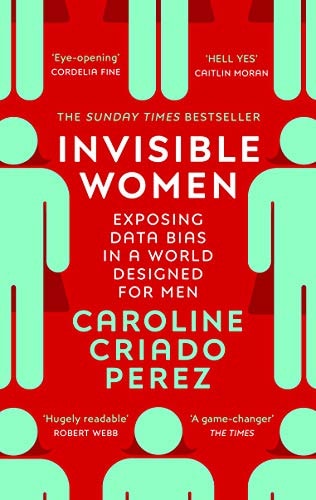
Imagine a world where every dimension of existence, from the mundane to the life-saving, has been shaped by a silent, pervasive assumption: that the default human is male. This is not a world of malicious intent, but one built upon a foundation of data that, in its very collection and analysis, consistently overlooks half of humanity. The consequences ripple through every facet of daily life, rendering women invisible in systems and designs meant to serve everyone.
Consider the simple act of navigating a city. Urban planning, from public transport routes to the placement of streetlights, often caters to the traditional male commute - a direct journey to and from a single workplace. Women, however, frequently undertake "trip-chaining," combining commutes with childcare, elder care, and errands, making multiple shorter stops. This pattern is rarely accounted for, leaving public transit inefficient for them and pedestrian infrastructure often unsafe or inconvenient. Even something as fundamental as public restrooms reveals this bias, with equal floor space allocated despite women requiring more time and often accompanying children.
Step into the workplace, and the male default persists. Office temperatures are typically calibrated to the male metabolic rate, leaving many women perpetually cold and uncomfortable. Protective equipment, from military uniforms to stab vests, is designed for the male physique, often ill-fitting and compromising the safety and effectiveness of women in these roles. Even the very tools we use, like smartphones, are often sized for the average male hand, making them less ergonomic for many women.
The realm of medicine and health reveals perhaps the most perilous consequences of this data gap. For centuries, medical research and drug trials primarily focused on male subjects, with findings then generalized to women. This oversight means that women are often misdiagnosed for conditions like heart attacks, as their symptoms can differ significantly from the "classic" male presentation. Dosages for medications, from sleeping pills to heart drugs, may be incorrect for the female body, leading to adverse effects. The female body, with its unique physiological differences, is treated as an anomaly rather than a distinct and equally important subject of study.
Beyond the physical, the economic landscape also renders women's contributions largely unseen. The vast amount of unpaid care work - childcare, elder care, housework - predominantly performed by women, is rarely factored into economic calculations like GDP. This invisible labor is the bedrock of society, enabling paid work, yet its economic value goes unmeasured and unacknowledged, contributing to pension shortfalls and perpetuating the idea that women's work is somehow less significant.
Even in moments of crisis, the male default can prove deadly. Evacuation procedures, disaster relief efforts, and safety protocols are often designed without considering the specific needs and vulnerabilities of women, who may be responsible for children, face mobility constraints, or encounter unique dangers in chaotic situations. The lack of sex-disaggregated data in these scenarios means that responses are less effective, and women's lives are disproportionately impacted.
This pervasive "gender data gap" is not always born of deliberate exclusion, but rather from a long-standing cultural habit of viewing the male experience as universal. The world, as it has been represented and constructed, is largely a reflection of a male point of view, often mistaken for absolute truth. To truly build a more equitable and functional world, it is imperative to consciously collect and analyze data that includes, values, and disaggregates for women's experiences, making the invisible visible and ensuring that designs, policies, and systems serve all of humanity.