Ma bibliothèque
Tu n'as pas encore de listes. Crée-en une dans Ma biblio.
Aller à Ma biblioMa bibliothèque
Tu n'as pas encore de listes. Crée-en une dans Ma biblio.
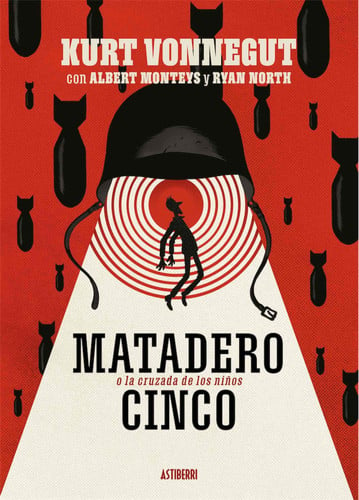
Aller à Ma biblioMatadero Cinco o La cruzada de los niños : una danza por deber con la muerte
- Langue
- Espagnol
- Publié en
- Maison d'édition
- Astiberri
- Pages
- 192
- ISBN
- 9788418215285
This novel presents a narrative that blends autobiography, science fiction, and satire to explore the lasting trauma of war. It challenges the conventional structure of storytelling to reflect the fractured nature of memory and the psychological impact of witnessing immense destruction. By examining one man's attempt to make sense of the senseless, the story questions the concepts of free will and fate, offering a profound and darkly humorous meditation on the absurdity of war and the search for meaning in a chaotic universe.
Thèmes
Infos sur l'édition originale
Autres éditions (63)
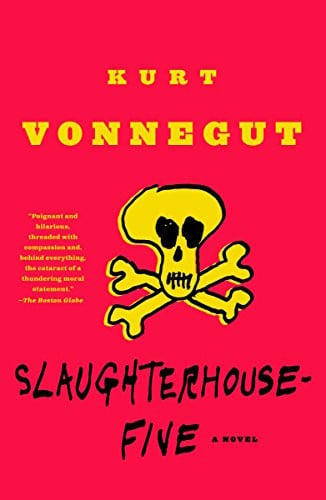
Slaughterhouse-five, Or, The Children's Crusade A Duty-dance with Death
2015 • Dial Press
Anglais

Slaughterhouse-Five A Novel
1999 • Random House Publishing Group
Anglais

Slaughterhouse-Five A Novel; 50th anniversary edition
2009 • Random House Publishing Group
Anglais

Slaughterhouse-Five
1991 • Random House Publishing Group
Anglais

Slaughterhouse-Five A Duty-Dance with Death
1991 • Turtleback
Anglais
Autres éditions
Slaughterhouse-five, Or, The Children's Crusade A Duty-dance with Death
2015 • Dial Press
Anglais
Slaughterhouse-Five A Novel
1999 • Random House Publishing Group
Anglais
Slaughterhouse-Five A Novel; 50th anniversary edition
2009 • Random House Publishing Group
Anglais
Slaughterhouse-Five
1991 • Random House Publishing Group
Anglais
Slaughterhouse-Five A Duty-Dance with Death
1991 • Turtleback
Anglais
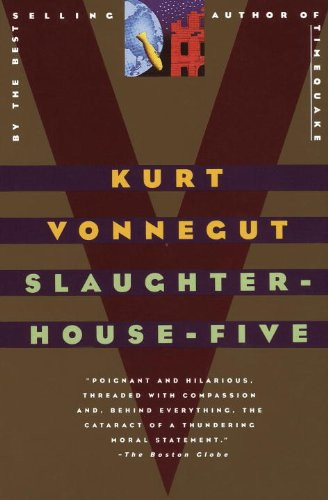
Slaughterhouse-five (Turtleback School & Library Binding Edition)
1999 • Turtleback Books
Anglais
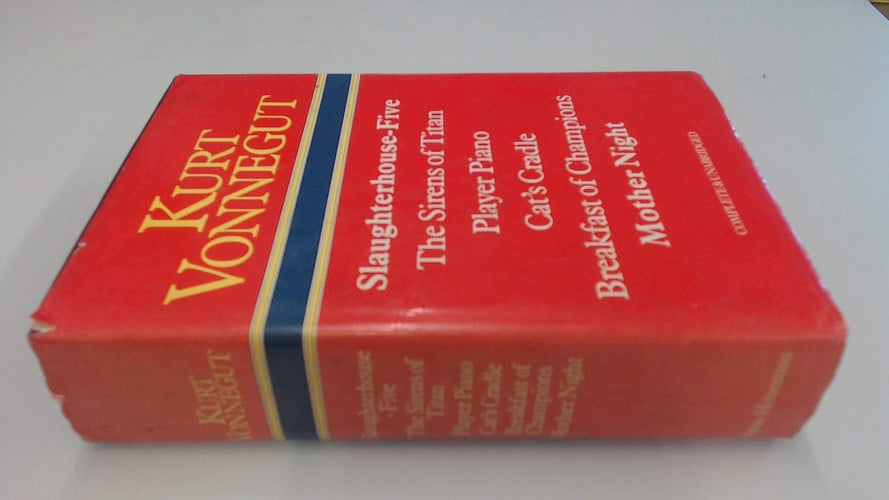
Kurt Vonnegut
1980 • Octopus/Heinemann
Anglais
Slaughterhouse-five, Or The Children's Crusade A Duty-dance with Death
2003 • Vintage
Anglais
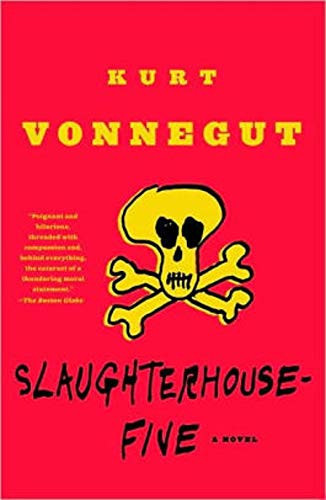
Slaughterhouse-five, Or, the Children's Crusade A Duty-dance with Death
1991 • Dell Publishing
Anglais

Slaughterhouse 5:Children 's Crusade a Dirty-Dance With Death
2000 • Vintage
Russe
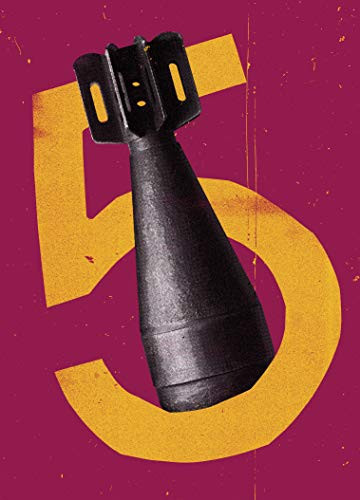
Slaughterhouse 5: The Children's Crusade A Duty-Dance With Death
2020 • Vintage Classics
Anglais
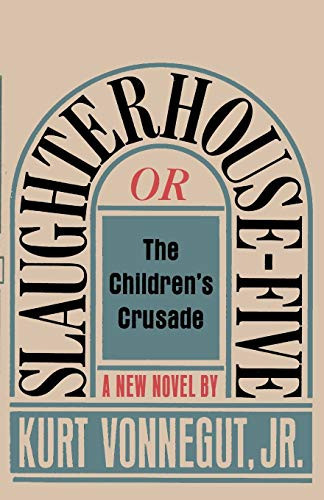
Slaughterhouse-five Or, The Children's Crusade : a Duty-dance with Death
2019 • Ishi Press International
Anglais
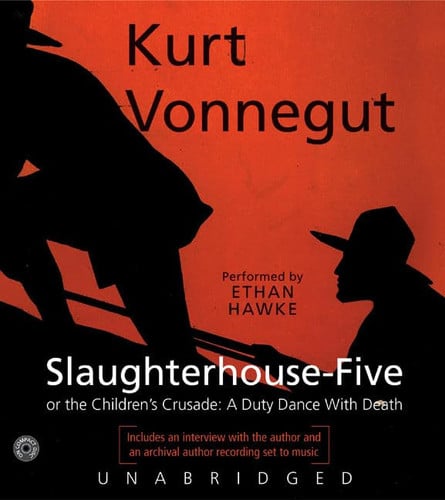
Slaughterhouse-Five (or The Children's Crusade: A Duty Dance with Death)
2003 • Caedmon
Anglais

X5 Slaughterhouse 5 Read Gu Exp
1997 • Vintage/Ebury (A Division of Random House Group)
Anglais
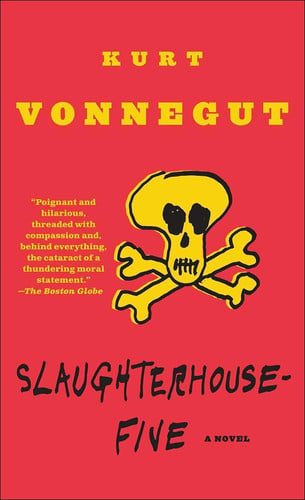
Slaughterhouse-Five
1991 • Perfection Learning Corporation
Anglais
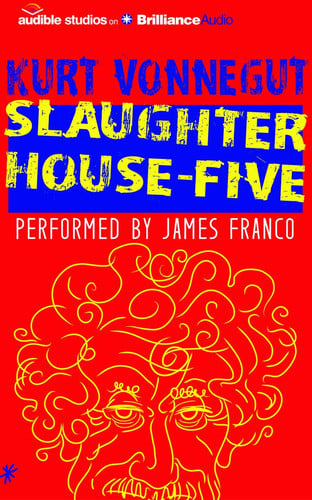
Slaughterhouse-Five
2016 • Audible Studios on Brilliance Audio
Anglais

Slaughterhouse-Five
1986 • Dh Audio
Anglais

Slaughterhouse Five
1973 • Caedmon
Anglais
Slaughterhouse 5 (SparkNotes Literature Guide)
2014 • Spark
Anglais

Mattatoio n. 5
2014 • Feltrinelli
Italien

Abattoir 5 ou La croisade des enfants farandole d'un bidasse avec la mort...
1992 • Seuil
Français
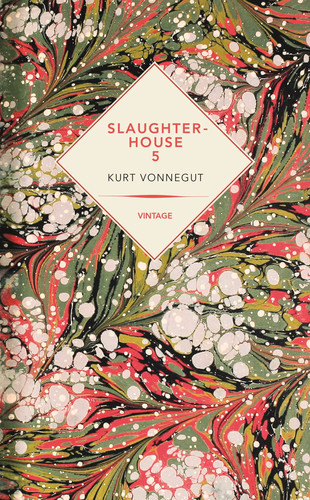
Slaughterhouse-five, Or, The Children's Crusade A Duty-dance with Death
2016 • Vintage
Anglais

Escorxador-5
2007 • Proa
Catalan

Slaughterhouse Five
2001 • Rosettabooks Llc
Anglais
Slaughterhouse-Five
1982 • Doubleday Books
Anglais

Slaughterhouse-five
1994 • Harperaudio
Anglais
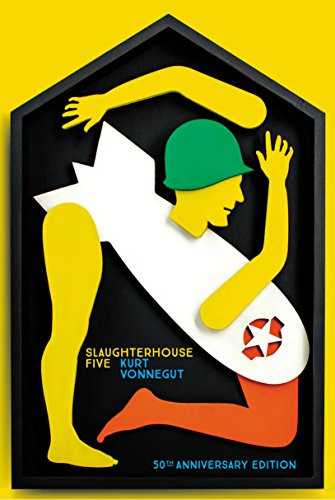
Slaughterhouse 5 50th Anniversary Edition
2019 • Vintage
Anglais

Slaughterhouse-Five A Duty-Dance with Death
2005 • Penguin Random House
Anglais

Slaughterhouse-Five
2023 • Random House
Anglais

Slaughterhouse-Five A Duty-Dance with Death
1923 • Random House Publishing Group
Anglais

Slaughterhouse-Five
2016 • Audible Studios on Brilliance Audio
Anglais

Slaughterhouse-Five
2012 • Random House
Anglais

Slaughterhouse-five
1999 • Dh Audio
Anglais

Slaughterhouse-Five A Duty-Dance with Death
1991 • Turtleback
Anglais
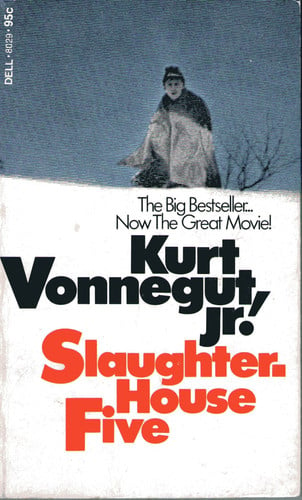
Slaughterhouse Five
1970 • DELL PUBL CO
Anglais

Slaughterhouse-five
1989 • Peter Smith Pub Inc
Anglais

Slaughter House-Five
2009 • Marco Book Company
Anglais
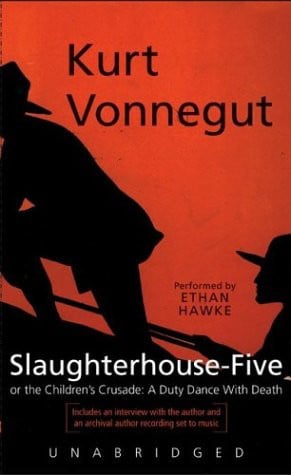
Slaughterhouse Five
2003 • Caedmon
Anglais

Mezbaha Bes
2021 • Can Yayinlari
Turc

五号屠场
2022 • 河南文艺出版社
Chinois
Бойня номер п'ять, або, Дитячий хрестовий похід , він же вальс зі смертю
2014 • Vydavnyt͡stvo Staroho Leva
Ukrainien

Matadero Cinco, O, La Cruzada de Los Ni~nos
1991 • Anagrama
Espagnol
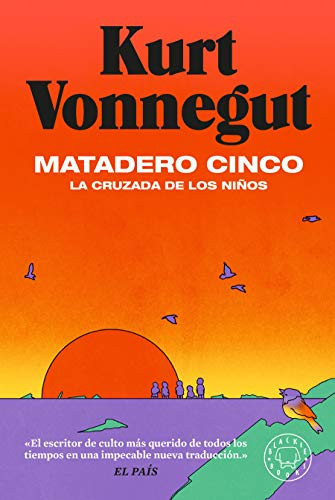
Matadero cinco: La cruzada de los niños / Slaughterhouse-Five
2021 • National Geographic Books
Espagnol

Slaughterhouse 5 Vintage War
2024 • Penguin Random House
Anglais

Slaughterhouse 5 Discover Kurt Vonnegut’s anti-war masterpiece
2020 • Random House
Anglais

Slaughterhouse-five Hauptbd.
1985 • Cornelsen Schwann
Anglais

Slaughterhouse-Five: Schulausgabe für das Niveau C1, ab dem 6. Lernjahr. Ungekürzer englischer Originaltext mit Annotationen
2013 • Klett Sprachen GmbH
Allemand

Бойня но 5, або, Крызговы паход дзетак раман
2010 • Lohvinaŭ
Biélorusse
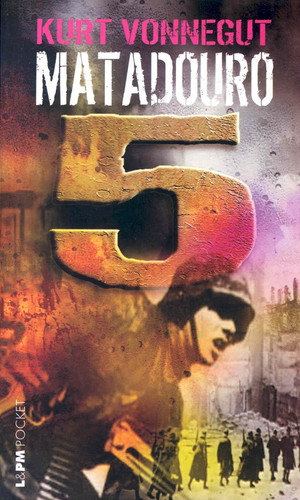
Matadouro 5
2005 • L&PM
Portugais
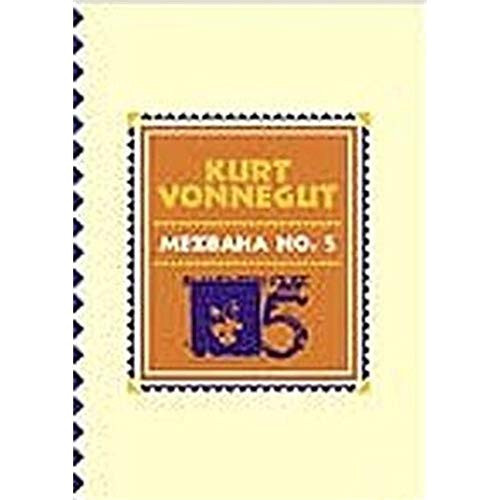
Mezbaha No.5
2016 • Dost Kitabevi
Turc

Abatorul cinci
2014 • Art
Roumain
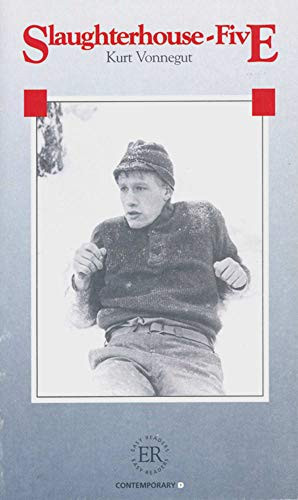
Slaughterhouse- Five. Or The Children's Crusade. (Lernmaterialien)
1994 • Klett
Anglais
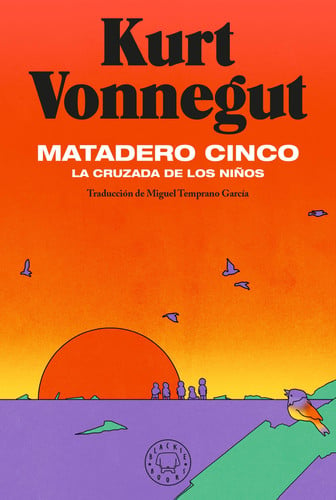
Matadero cinco
2021 • Blackie Books
Espagnol
Slaughterhouse Five
1970 • Random House Publishing Group
Anglais

Slaughterhouse 5 Discover Kurt Vonnegut's Anti-War Masterpiece
2024 • Penguin Random House
Anglais
Slaughterhouse-Five A Duty-Dance with Death
1997 • Penguin Random House
Anglais

Teurastamo 5, eli, Lasten ristiretki velvollisuustanssi kuoleman kanssa
2004 • Tammi
Finnois
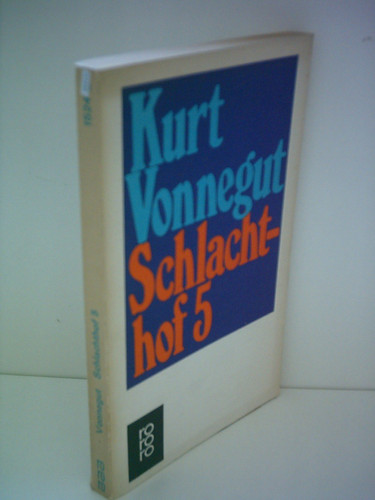
Schlachthof 5 oder der Kinderkreuzzug.
1972 • Rowohlt Tb.
Allemand
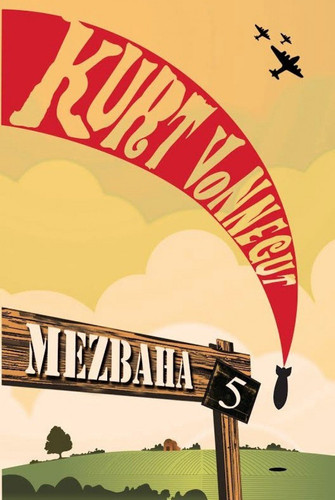
Mezbaha 5
2015 • April Yayincilik
Turc
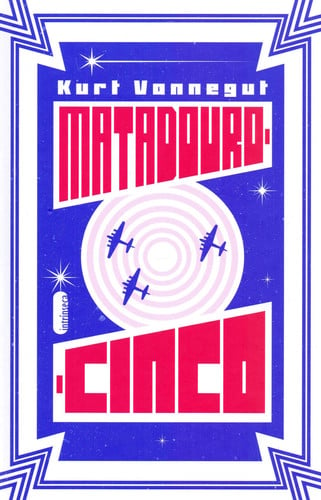
Matadouro-Cinco
2019 • Intrínseca
Portugais
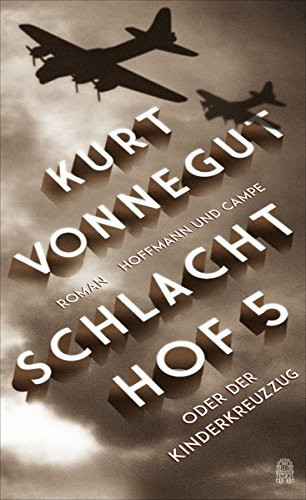
Schlachthof 5 ( Fünf ): oder Der Kinderkreuzzung
2016 • Hoffmann u Campe Vlg GmbH
Allemand

Kurt Vonnegut, Jr. Reads Slaughter House Five (Swc 1376)
1973 • Caedmon Audio Cassette
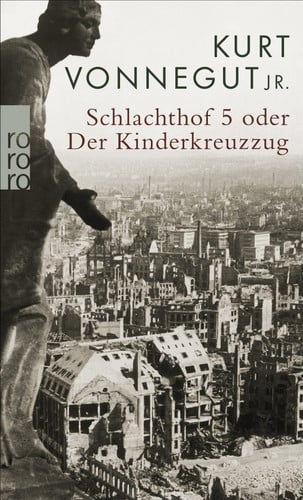
Schlachthof 5 oder der Kinderkreuzzug
2010 • Rowohlt-Taschenbuch-Verlag
Allemand
Listen: Billy Pilgrim has come unstuck in time. He is a funny-looking optometrist from Ilium, New York, who has been thrown through the full arc of his life, from his birth to his death and all the moments in between. He goes to sleep a senile widower and awakens on his wedding day. He walks through a door in 1955 and comes out another one in 1941. He is spastic in time, with no control over where he is going next, a man in a constant state of stage fright. He says he was first unstuck during the war, long before he was kidnapped by a flying saucer from the planet Tralfamadore. There, he was displayed naked in a zoo and mated with a movie star named Montana Wildhack. It was the Tralfamadorians who explained it all to him: all moments, past, present, and future, have always existed and always will. They can look at all of time the way one might look at a stretch of the Rocky Mountains. When a Tralfamadorian sees a corpse, he thinks only that the person is in bad condition in that particular moment, but is just fine in plenty of other moments. So he simply shrugs and says what they say about dead people, which is, “So it goes.”
The war finds Billy as a chaplain's assistant, a powerless figure of fun. During the Battle of the Bulge, he is lost behind German lines, a filthy flamingo in cheap civilian shoes, tagging along with two scouts and a brutish antitank gunner named Roland Weary. Weary is a stupid, fat, and mean boy who fancies himself, along with the scouts, one of the “Three Musketeers,” saving Billy's life again and again. In truth, he only torments Billy, kicking and cursing him to keep him moving. “You guys go on without me,” Billy says, again and again, wishing only to be left alone. After the scouts ditch them, Weary beats Billy senseless in a frozen creekbed, only to be interrupted by five German soldiers and a police dog. Weary is captured, and his fine combat boots are taken from him. In the days that follow, locked in a crowded boxcar, his feet turn to gangrene. As he dies, he tells everyone who will listen that Billy Pilgrim is the one who killed him. A small, vicious car thief named Paul Lazzaro promises to avenge him. So it goes.
The journey by train is a slow crawl across Germany, a coffin on wheels where men excrete into their helmets and the living nestle like spoons with the dead. On the ninth day, a hobo dies, his last words an insistence that “This ain't bad.” So it goes. When the doors are finally opened, the survivors emerge into a prison camp, a sea of dying Russians. There they are met by a miracle: a compound of fifty middle-aged English officers, clean and ruddy and strong, who have been prisoners since the start of the war. They sing “Hail, Hail, the Gang's All Here” as they welcome the skeletal Americans into a shed transformed into a banquet hall, with glowing stoves, fresh-baked bread, and golden soup. That night, they stage a musical version of *Cinderella*. Billy, delirious with morphine in the camp hospital, watches as one of the ugly stepsisters, a man in drag, laments, “Goodness me, the clock has struck - Alackday, and fuck my luck.”
From the camp, the Americans are sent to Dresden, an open city, a place of untouched beauty. “It's Oz,” someone whispers, seeing the intricate, enchanted skyline. Their new home is a slaughterhouse, Schlachthof-fünf. They are put to work in a factory that makes enriched malt syrup for pregnant women. The work is easy, and the city is peaceful. Sirens wail every day, but the bombers are always bound for someplace else. The men secretly spoon the syrup, a sweet, smoky taste of life. A high school teacher named Edgar Derby, a good and gentle man, is elected their leader. He is forty-four years old and has a son fighting in the Pacific. He is filled with a mournful, patriotic dignity. He will not survive the war.
On the night of February 13, 1945, the sirens howl, but this time they are for Dresden. The Americans and their guards take shelter in a deep meat locker, hollowed out of living rock beneath the slaughterhouse. Above them, they hear the sounds of giant footsteps as sticks of high-explosive bombs walk across the city. Then comes the fire. When they emerge the next day, the sun is an angry pinhead in a black sky. Dresden is gone. It is like the moon, a landscape of minerals and low, graceful curves of stone. There are to be no moon men at all. The guards, in their shock, look like a silent barbershop quartet. Small logs litter the ground, which turn out to be the charred remains of people caught in the fire-storm. So it goes.
For days, the prisoners become corpse miners, digging into the ruins to retrieve the dead. At first, the shelters they uncover are like wax museums, but soon the bodies liquefy, and the stink is like roses and mustard gas. The work is ended with flamethrowers. In the midst of this, Edgar Derby is found with a teapot he took from the ruins. He is arrested for plundering, given a trial, and executed by a firing squad. So it goes. When the war finally ends, Billy and the others emerge from their captivity. The trees are leafing out. A wagon stands abandoned, drawn by two horses with bleeding mouths and broken hooves. As Billy watches the suffering animals, he weeps for the first time in the war. A bird says to him, “Poo-tee-weet?”
Years later, Billy is the sole survivor of a plane crash. His wife, Valencia, dies in a car accident while rushing to his side. So it goes. In the hospital, he lies next to a historian writing about the very air raid he survived, a man who insists the bombing of Dresden “had to be done.” It is after this crash that Billy begins to tell his story to the world, writing letters to the newspaper and appearing on talk radio, trying to explain the truths he learned on Tralfamadore. His children think he is senile. “Father, Father, Father,” his daughter says, “what are we going to do with you?” But Billy knows what will happen. He has seen his own death, an assassination in 1976 at the hands of an aging Paul Lazzaro, fulfilling his promise to Roland Weary.
Billy is not afraid. He knows that death is just a bad moment, that he will always be alive in the past: as a boy at the Grand Canyon, terrified of falling in; as a young optometrist proposing to his large, unlovely wife; as a prisoner watching Cinderella's silver boots gleam under a golden throne. He will always be in the zoo on Tralfamadore, nestled with Montana Wildhack and their child, safe under a geodesic dome. He has been given a secret for surviving the traumas of his life: to ignore the awful times and concentrate on the good ones.
And so, the story ends where it began, with a man trying to make sense of a massacre. I have told my sons that they are not to take part in massacres, and that the news of massacres of enemies is not to fill them with satisfaction or glee. When I went back to Dresden, years after the war, the city looked a lot like Dayton, Ohio. The German taxi driver who showed us the old slaughterhouse had lost his mother in the fire. So it goes. He sent a Christmas card that wished for a world of peace and freedom, “if the accident will.” In the end, after all the destruction, after all the attempts to explain and justify, there is only the quiet of the aftermath. And the birds. And the question one of them asks of Billy Pilgrim. *Poo-tee-weet?*
Pas encore de discussion pour ce livre.
Supprimer la discussion
Es-tu sûr de vouloir supprimer cette discussion ? Cette action est irréversible.
Rating Sources
Reviewers widely praise this book for its unique blend of tragedy and dark humor, often noting its success in tackling profound themes through an unconventional narrative. Many found the fractured structure, with its time-traveling element, to be fascinating, original, and highly effective in conveying the story's deeper messages. The book is frequently lauded as a powerful anti-war statement, prompting deep reflection on life, death, sanity, and humanity. Readers appreciate the memorable characters and the author's distinctive prose style, which, despite its simplicity, is often described as impactful, brilliant, and capable of evoking complex thoughts and feelings. Its ability to combine science fiction, satire, and a war story into a coherent and thought-provoking experience is consistently highlighted as a mark of its genius, cementing its status as a modern classic.
However, some readers found the book's stylistic choices to be a significant detractor. The repeated phrase "So it goes" is frequently cited as annoying, irritating, or heavy-handed. While many appreciate the minimalist prose, others found it monotonous, overly sparse, or simplistic, at times feeling more like a bare-bones outline than a fully fleshed-out story. The non-linear and jumbled narrative, while praised by some, was confusing or difficult for others, occasionally leading to a sense of disorientation or a "headache." A few reviewers felt the philosophical musings were not as novel or interesting as intended, and the detached, fatalistic humor did not always resonate. Additionally, some critics noted a problematic portrayal of women, describing them as superficial or reduced to their physical attributes.
Overall, this book is widely recognized as a significant and enduring work, though it tends to be polarizing due to its distinctive style and thematic approach. It is highly recommended for readers who appreciate experimental storytelling, are open to a blend of genres including science fiction and satire, and seek a profound, often darkly humorous, exploration of war's impact and the human condition. Those who enjoy unconventional narratives that challenge traditional structures and are willing to engage with ambiguity will likely find this book a deeply rewarding and thought-provoking experience.
Pas encore d'avis. Sois le premier à en donner un !
Supprimer l'avis
Es-tu sûr de vouloir supprimer cet avis ? C'est irréversible.


