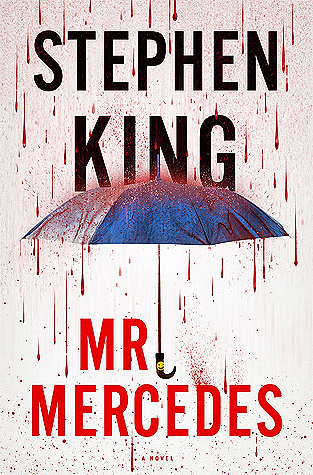
In the bleak light of a Midwestern city, a stolen Mercedes plows into a line of desperate job seekers, leaving eight dead and a detective haunted by the unsolved case. Now retired and slipping into a life of lonely depression, Bill Hodges is jolted back to life by a single letter. The author is the killer himself, taunting Hodges and threatening an even more diabolical attack. This begins a private, high-stakes cat-and-mouse game between the aging ex-cop and a cunning, unhinged murderer.
Working outside the law, Hodges finds himself in a relentless race against time. The killer, hiding in plain sight, watches his every move, pushing the psychological game to its limits while preparing a new atrocity that could claim thousands of lives. With the help of a few unlikely allies, Hodges must track down a monster whose evil is rooted not in the supernatural, but in the chillingly ordinary. The novel is a taut, propulsive thriller that pits a faltering hero against a truly terrifying villain, exploring whether one man's renewed purpose is enough to stop a catastrophe.
A pre-dawn fog, thick and cold, clung to the distressed American city as a line of desperate souls gathered, waiting for a job fair to open its doors. Suddenly, a stolen gray Mercedes roared out of the mist, plowing through the hopeful crowd, leaving a horrific trail of eight dead and many more wounded. The driver, a phantom in the chaos, backed up and charged again before vanishing into the gloom. The case, dubbed the "City Center Massacre," remained unsolved, a festering wound in the city's memory and in the soul of the lead detective, Bill Hodges.
A year later, Hodges, now retired and adrift in a sea of depression and suicidal thoughts, found his monotonous days shattered by a taunting letter. It was from the "Mercedes Killer," a chilling missive bragging about the massacre and inviting Hodges to engage in a deadly game of cat and mouse online. This dark challenge, rather than pushing him further into despair, ignited a spark of purpose in the old detective, a fierce determination to bring the monster to justice.
The killer was Brady Hartsfield, a psychopathic, racist loner who lived with his alcoholic mother, Deborah. He worked two unassuming jobs, as an electronics store clerk and an ice-cream man, allowing him to blend seamlessly into the background while meticulously planning his next act of terror. He reveled in the psychological torment he inflicted, having previously manipulated the Mercedes's owner, Olivia Trelawney, into suicide, a fact Hodges discovered through Olivia's sister, Janey Patterson.
Hodges, fueled by a renewed sense of mission and a growing connection with Janey, embarked on an unofficial investigation. He found an unlikely ally in Jerome Robinson, a bright, computer-savvy teenager who mowed his lawn and helped him navigate the digital world where Brady lurked. Their pursuit intensified as Brady, enraged by Hodges's defiance, plotted to harm Jerome's dog. However, in a twisted turn of fate, his own mother consumed the poisoned meat intended for the animal, leading to her death and further fueling Brady's psychotic fury, now singularly focused on Hodges.
The stakes escalated dramatically when Brady planted a bomb in Hodges's car, a device that tragically claimed Janey Patterson's life instead of the detective's. Her death transformed Hodges's pursuit from a professional duty into a deeply personal vendetta. Heartbroken but resolute, he found another unexpected partner in Holly Gibney, Janey's socially awkward but incredibly perceptive cousin. Holly, with her unique insights and technological prowess, proved to be an invaluable asset to their makeshift team.
As the trio - Hodges, Jerome, and Holly - raced against time, they uncovered Brady's most horrific plan yet: a mass casualty event at a sold-out boy band concert. Brady intended to detonate explosives, aiming to kill thousands, a grand statement of chaos and despair. The climax unfolded in a desperate struggle to prevent the massacre, a tense confrontation where Hodges, despite suffering a heart attack, pushed himself to the brink. The unlikely heroes, through their combined efforts and courage, managed to thwart Brady's diabolical scheme, saving countless lives.
Brady Hartsfield, though alive, was left in a persistent vegetative state, his reign of terror seemingly ended. Hodges, having faced down his demons and found redemption in his relentless pursuit of justice, had reclaimed purpose and connection in his life. The battle against evil had been won, not by official channels, but by the resilience of a retired detective and his unconventional allies, proving that even in the darkest corners, human connection and courage can triumph over isolation and malice.
What other readers say
Liked
Many readers found "Mr. Mercedes" to be a captivating and fast-paced crime thriller, marking a successful departure for Stephen King into the hard-boiled detective genre. Reviewers frequently praised the novel's relentless suspense and addictive quality, describing it as a page-turner that keeps readers hooked on the cat-and-mouse game between the retired detective and the killer. The antagonist, Brady Hartsfield, is consistently highlighted as a creatively crafted, evil, and memorable villain, making for a compelling good versus bad dynamic. The primary protagonist, Bill Hodges, was often lauded as a relatable and authentic character, with many appreciating King's signature skill in character development, particularly for the evolving trio of Hodges, Jerome, and Holly, whose unique personalities and interactions added depth and humor to the story.
Disliked
Despite its strengths, the book garnered significant criticism, particularly regarding character consistency and plot credibility. Some reviewers found the dialogue stiff, unrealistic, and prone to excessive exposition, leading to characters feeling flat or cliched. A major point of contention was Detective Hodges' decision to pursue the killer independently, with many finding his actions reckless, negligent, and his motivations difficult to believe, especially when innocent lives were at stake. The portrayal of female characters, notably Janey, was frequently criticized as stereotypical, existing primarily to serve the male narrative, and the "insta-love" romance was deemed unbelievable. Issues with fat-shaming and occasional condescending pop culture references were also noted. Additionally, some readers felt the plot was predictable, lacked originality, or suffered from convenient plot devices and holes, while a few found the overall pacing to lag in certain sections.
In short
Overall, "Mr. Mercedes" elicits a mixed but generally positive response, often described as a solid read with notable strengths despite its flaws. While not universally considered King's best work, it is widely acknowledged as an entertaining and engaging thriller. This book is recommended for readers who enjoy fast-paced crime and detective stories, especially those featuring a compelling villain and a determined protagonist. Fans of Stephen King who are open to his non-supernatural ventures will likely appreciate his unique approach to the genre and his strong character development, even if some elements might feel different from his traditional horror. It serves as an exciting entry point into a new trilogy for King's diverse readership.