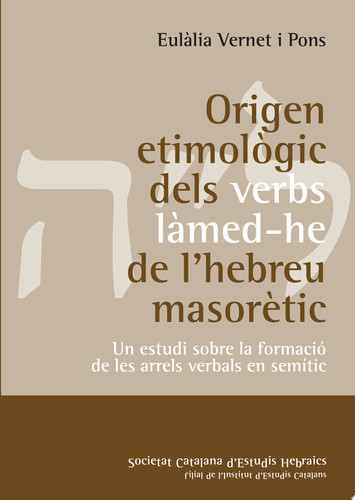
A deep journey unfolds into the very architecture of language, specifically charting the etymological origins of the *làmed-he* verbs within Masoretic Biblical Hebrew. The endeavor sets out to illuminate the intricate processes that shaped these particular verbal roots, tracing their lineage back through the annals of Semitic linguistic history. It is an exploration into the nature of "weak verbs," those whose third radical consonant is a *he* (ה), often presenting unique challenges and fascinating insights into the evolution of verbal forms.
The investigation commences by laying a foundational understanding of the historical development and formation of Proto-Semitic verbal and nominal roots. It delves into the primordial structures from which the rich tapestry of Semitic languages, including Hebrew, ultimately emerged. This initial phase meticulously reconstructs the ancient patterns and principles governing root formation, providing the essential context for understanding the later, more specialized analysis.
Following this broad historical overview, the focus narrows considerably to the *verba tertiae infirmae* - the *làmed-he* verbs - of Masoretic Biblical Hebrew. Here, a detailed etymological and comparative study is undertaken, dissecting the specific characteristics of these verbs. It examines how their final *he* radical interacts with various suffixes and conjugations, often leading to its disappearance or transformation, a hallmark of their "weak" nature.
The study meticulously categorizes these verbs, providing an etymological inventory that reveals their deep historical connections. Through comparative linguistics, it seeks to uncover the precise origin of the determinative radical suffixed to the Proto-Semitic verbal root in each case where such a reconstruction is feasible. This involves scrutinizing cognates and parallels across different Semitic languages to piece together their ancient forms and meanings.
Indeed, the pursuit of these etymological threads often leads beyond the confines of Proto-Semitic, venturing into the even more ancient Proto-Afro-Asiatic stage. One striking example brought to light is the Hebrew verb *ḥåyâ* (הָי ָח), meaning 'to live,' a doubly weak verb whose origins are demonstrably rooted in this profound linguistic antiquity. By examining evidence from the earliest Semitic and Afro-Asiatic tongues, the study reconstructs the Proto-Semitic and Proto-Afro-Asiatic roots of such verbs, offering fresh etymological insights that had previously remained unobserved.
Ultimately, this comprehensive work stands as a testament to the dynamic and evolving nature of language, revealing how seemingly irregular verbal forms are, in fact, echoes of ancient phonetic and morphological processes. It provides a deeper appreciation for the structural ingenuity embedded within Hebrew, demonstrating how the very foundations of its verbal system are inextricably linked to a much broader Semitic and Afro-Asiatic heritage.