The journey into the deep origins of consciousness begins not with humans, but with the ocean itself, the primordial cradle where life first stirred into being. Imagine the ancient seas, some 600 million years ago, where simple, unruly clumps of cells began to coalesce, to sense, to act, and to signal, slowly weaving the intricate tapestry of early animal life. This was a time when organisms became profoundly entangled with one another, predator and prey shaping each other's very existence, leading to the evolutionary leaps that would eventually give rise to nervous systems.
Within this aquatic crucible, a remarkable story unfolds: the independent evolution of complex minds. While mammals and birds carved their path towards intelligence, a profoundly different lineage embarked on its own parallel journey: the cephalopods. These creatures - octopuses, squids, and cuttlefish - represent an "island of mental complexity" among invertebrates, a separate experiment in the development of large brains and sophisticated behavior. Their last common ancestor with us was a small, flattened worm that lived roughly 600 million years ago, making their intelligence truly alien.
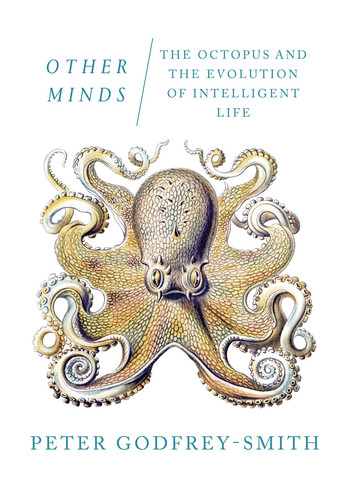
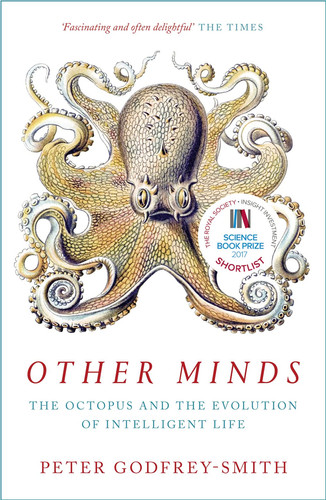
To truly grasp the nature of consciousness, one must dive beneath the surface, into the vibrant, ever-shifting world of the octopus. Here, we encounter a creature whose intelligence is not merely a scaled-down version of our own, but something fundamentally "other." Octopuses, with their eight muscular arms, possess a nervous system so distributed that their tentacles can, in a sense, "think for themselves," holding almost twice as many nerve cells as their central brain. This distributed intelligence allows for a startling array of complex behaviors, from ingenious problem-solving and tool use to remarkable camouflage and intricate communication through rapid changes in skin color and texture.
Observing these creatures in their natural habitat, in the rich marine environments off the coast of Australia, one witnesses moments of profound connection and bewildering difference. An octopus might recognize individual human divers, even squirting water at a particular person, demonstrating a level of awareness and differentiation that defies expectations for a largely asocial animal with no shared evolutionary history with humans. They exhibit curiosity, engagement, and even playfulness, suggesting an inner life that is rich and complex, challenging our anthropocentric views of intelligence.
The very existence of these "other minds" compels a philosophical inquiry into the nature of consciousness itself. It suggests that consciousness is not a singular, linear progression culminating in human awareness, but rather an evolutionary plurality, a phenomenon that can arise through diverse biological pathways. The question then becomes not just "what is it like to be an octopus?" but what these diverse forms of intelligence teach us about the fundamental mechanisms of subjective experience, the interplay between sensing and acting, and the continuous feedback loop between an organism and its environment.
Yet, there's a poignant brevity to the octopus's existence. Most octopuses live for only about two years. This short lifespan raises intriguing questions about the purpose of such advanced intelligence. Perhaps their mental capabilities evolved not for long-term learning and cumulative knowledge, but primarily to manage their incredibly amorphous and flexible bodies, which demand a sophisticated nervous system to control. Their intelligence, therefore, is deeply embodied, a testament to how different physical forms can shape different kinds of minds.
Ultimately, by immersing ourselves in the world of the octopus, we confront the deepest mysteries of our own awareness. The cephalopods serve as a living testament to the fact that evolution built minds not once, but at least twice, offering us the closest encounter we may ever have with an intelligent alien. This journey into the "other minds" of the sea invites us to reconsider what it means to think, to feel, and to be aware, pushing the boundaries of our understanding of the mind and its myriad manifestations across the vast tree of life.