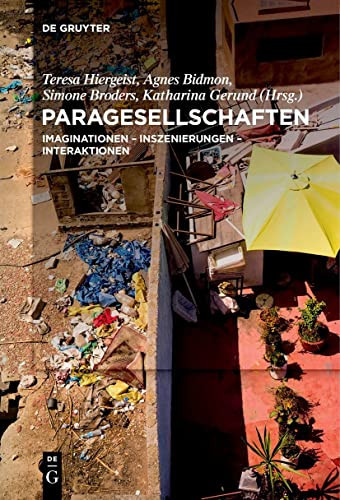
In the vibrant tapestry of contemporary cultures, where the threads of social homogeneity and heterogeneity are ceaselessly interwoven, a concept emerges to challenge the reductive narratives of "parallel societies." This framework, instead, introduces the idea of "parasocieties," inviting a more nuanced and expansive understanding of how diversity is imagined, staged, and interacts within the present day. It seeks to dismantle the often-stigmatizing connotations inherent in the discourse of segregation, offering a lens through which the complex interplay of group formations and their societal reflections can be critically examined.
The very notion of "parasocieties" serves as an antidote to the essentialist and often polemical discussions surrounding social cohesion in political and media spheres. It acknowledges that various forms of collective life, whether emergent or established, exist alongside dominant societal structures, contributing to the rich, multifaceted nature of our shared world. These aren't isolated enclaves to be feared or dismissed, but rather dynamic spaces of identification, interaction, and cultural production that demand careful observation and analysis.
Across a spectrum of contemporary cultural expressions, from the nuanced narratives of literature to the pervasive imagery of popular culture, one can discern the manifold ways in which these parasocieties take shape. They are not merely sociological phenomena but deeply embedded cultural constructs, shaped by collective imaginaries and brought into being through intricate stagings and performances. The interplay between these imagined worlds and their tangible manifestations reveals much about the negotiation of social power and belonging in an increasingly diverse global landscape.
Consider, for instance, the literary explorations of neoliberal and anarchist parasocieties, or the artistic renditions of the "classes populaires" as distinct socio-cultural entities. These portrayals delve into the specific characteristics and internal dynamics of such groups, examining their worldviews, their internal structures, and their often-ambivalent relationships with broader society. They illuminate how aesthetic strategies and narrative modes, be they utopian, fantastic, or rooted in popular culture, serve to represent and even construct these alternative forms of sociality.
From the strategic boundaries of gated communities to the communal bonds forged in intentional living arrangements, the concept extends its reach, allowing for a comparative examination of seemingly disparate phenomena under a unifying theoretical umbrella. It reveals that the discourses of demarcation, often used to define and control, are themselves complex processes that reflect and reinforce existing social hierarchies. Through interdisciplinary case studies, the intricate typological features and socio-cultural functions of parasocieties are brought to light, demonstrating their impact on both individual and collective identities.
Ultimately, the exploration of parasocieties is an invitation to engage with the discursive negotiations of social cohesion from a fresh perspective. It moves beyond simplistic binaries, fostering a deeper appreciation for the intricate ways in which diverse groups coexist, interact, and contribute to the ever-evolving definition of what it means to be a society in the present day. It encourages a critical gaze at the forces that shape our collective imagination and the cultural forms through which these complex social realities are continuously enacted and understood.