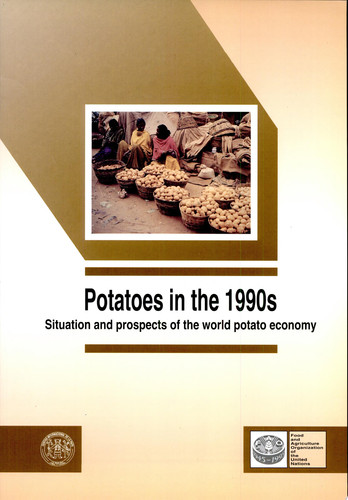
The global potato economy, as it stood in the 1990s, presented a dynamic landscape characterized by evolving patterns of production, utilization, and trade. While historically concentrated in Europe, North America, and the former Soviet Union, a notable shift was underway, with burgeoning production and demand emerging across Asia, Africa, and Latin America. This eastward and southward expansion signaled a significant reorientation of the potato's global footprint, transforming its role in food systems worldwide.
A comprehensive analysis of this period reveals the intricate structure of the world potato economy, delving into the specifics of how the tuber was cultivated, consumed, and exchanged across international borders. Production methods, ranging from traditional smallholder farming to more industrialized approaches, shaped regional outputs and influenced market dynamics. The sheer volume of potatoes grown underscored their importance as a staple food, providing essential carbohydrates and micronutrients to a significant portion of the global population.
The utilization of potatoes extended beyond fresh consumption, encompassing a growing array of processed products. This diversification in use, from crisps and fries to starches and dehydrated forms, not only added value to the crop but also created new avenues for trade and economic activity. International trade patterns, though perhaps less pronounced for fresh potatoes compared to other major commodities due to their vegetative propagation, were nonetheless a critical component of the global economy, connecting producers with distant markets and contributing to national economies.
Looking towards the future from the vantage point of the 1990s, several factors were identified as pivotal in shaping the potato's trajectory. The outcomes of international trade agreements, such as the Uruguay Round of the General Agreement on Tariffs and Trade (GATT), were expected to influence market access and competitive landscapes. These agreements held the potential to either open new opportunities for potato-producing nations or impose new challenges through altered trade policies and tariffs.
However, the path to expansion was not without its impediments. Various constraints, including disease susceptibility, inadequate storage facilities, and limited access to improved seed varieties, posed significant challenges to maximizing potato yields and ensuring consistent supply. Addressing these issues was deemed crucial for unlocking the full potential of the potato, particularly in developing regions where it was increasingly vital for food security and livelihood.
In light of these challenges and opportunities, the study illuminated areas requiring concerted action to foster the continued development of the world potato economy. This included calls for enhanced research into disease-resistant varieties and improved agricultural practices, investments in post-harvest infrastructure, and policies that supported fair trade and market access for producers. The aim was to ensure that the potato, an efficient crop in terms of energy per unit of land and time, could continue to play its indispensable role in global food security and economic stability well into the new millennium.