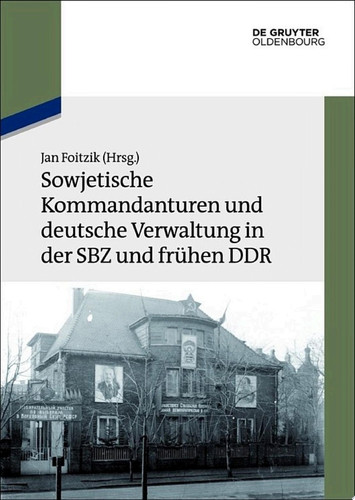
In the immediate aftermath of the Second World War, as the dust settled over a shattered Germany, a new order began to take shape in the Soviet Occupation Zone (SBZ). The Soviet Military Administration in Germany (SMAD), headquartered in Berlin-Karlshorst, assumed direct control in June 1945, wielding supreme governmental power. Its initial mandate was multifaceted: to extract reparations for the immense destruction wrought by the war, to purge Nazi elements from society, and to lay the groundwork for a socialist state in the territories under its influence. This period saw the dismantling of industrial equipment for shipment to the Soviet Union, imposing severe hardships and contributing to widespread famine and industrial stagnation.
The path to a new German administration was not one of democratic self-governance, but rather a carefully orchestrated process under Soviet tutelage. While anti-fascist parties were initially permitted, their autonomy was limited, and they were gradually subordinated to communist directives. The forced merger of the Communist Party of Germany (KPD) and the Social Democratic Party of Germany (SPD) in 1946 to form the Socialist Unity Party of Germany (SED) was a crucial step in entrenching Soviet-style governance, designed to create a single, dominant "state party". The SMAD systematically documented its district, county, and city Kommandanturen, along with their commanders, to ensure meticulous oversight of this nascent German administration.
From the outset, a complex and often contradictory legal landscape emerged, a chaotic blend of Soviet occupation law, remnants of Nazi-era decrees, regional German regulations, and the new directives of the evolving East German state. The Soviet Kommandanturen functioned as critical organs of control and intervention, guiding the transformation from an occupation dictatorship to a dependent party dictatorship of the SED. They dictated land reforms, confiscating estates without compensation, and oversaw the nationalization of major industries, often under the guise of seizing assets from war criminals.
As the Cold War escalated, the Soviet grip tightened. The Soviet Union blockaded land and water access to Berlin between June 1948 and May 1949 in response to Western economic integration efforts, further solidifying the division of Germany. On October 7, 1949, the German Democratic Republic (GDR) was formally established, with East Berlin as its seat of government. Although the SMAD was officially dissolved in November 1949 and replaced by the Soviet Control Commission (SKK), direct Soviet influence remained profound.
The Kommandanturen, initially dissolved with the formation of the GDR, were re-established in 1952, underscoring the enduring Soviet oversight. This period was marked by measures that mirrored the "Stalinization" processes seen across Central and Eastern Europe, including decrees for the build-up of East German armed forces under the guise of a police force. The supervision of East German administration was not solely the purview of the military Kommandanturen; the Soviet secret service also exerted irregular, yet significant, control until at least 1953.
The relationship between the Soviet occupiers and the German administrators was never a linear progression. The federal structure of the SBZ and the various "transmission organs" - both regular and irregular - employed by the occupying power and the SED distorted both the development and the perception of this transformation. The ultimate aim, to mold the SBZ and later the GDR into a state modeled on the Soviet Union, was pursued not through the free will of the populace, but by strategically placing communist cadres in key positions and systematically weakening any opposition.
Even after the signing of a "Treaty on Sovereignty" between the USSR and the GDR in September 1955, which dissolved the Soviet High Commissioner's Office, Soviet forces remained permanently stationed in East Germany. The presence of hundreds of thousands of Soviet troops underscored the continued, albeit modified, nature of Soviet dominance. This period, stretching from the immediate post-war years into the early existence of the GDR, laid the foundational administrative and political structures that would define the East German state for decades, all under the pervasive shadow and direct influence of the Soviet Kommandanturen.