Carved from a talking piece of wood, Pinocchio bursts into existence as a mischievous marionette with one singular desire: to become a real boy. His journey begins with the loving but impoverished woodcarver Geppetto, his creator and father figure. However, Pinocchio's impulsive nature and susceptibility to temptation quickly lead him into a series of perilous escapades.
As he navigates a world filled with cunning tricksters, fantastical creatures, and moral dilemmas, Pinocchio repeatedly faces the consequences of his choices, famously marked by a growing nose with each untruth. Guided by the persistent voice of the Talking Cricket and the benevolent, yet often stern, Blue Fairy, he encounters lessons about honesty, hard work, and the profound meaning of self-sacrifice. This classic tale explores the universal struggles of growing up and the transformative power of redemption, ultimately asking what it truly means to be human.
In a small Tuscan village, an old woodcarver named Geppetto yearned for a son. One day, a peculiar piece of wood, capable of laughter and tears, found its way into his hands. From it, he carved a puppet, naming him Pinocchio, and wished for him to be a real boy. No sooner was he finished than Pinocchio, a mischievous and lively marionette, sprang to life, immediately running out the door and into the streets, leading to Geppetto's brief imprisonment.
Left to his own devices, Pinocchio quickly demonstrated his impulsive nature. He encountered a Talking Cricket, who tried to offer wise counsel, but the headstrong puppet, annoyed by the advice, killed him. Geppetto, upon his release, sacrificed his only coat to buy Pinocchio a school primer, hoping for a better future for his wooden son. Yet, Pinocchio, easily swayed, sold his schoolbook for a ticket to a puppet theater, where his antics nearly led him to be burned as firewood.
His adventures continued, leading him to the treacherous Fox and Cat, who, with cunning flattery, convinced him to bury his five gold coins in the "Field of Miracles," promising they would multiply. Instead, they robbed him, and disguised as assassins, hanged him from the Great Oak Tree. It was then that the benevolent Fairy with Azure Hair, a mysterious and kind figure, rescued him. During his recovery, Pinocchio lied about the stolen coins, and his nose, to his dismay, grew to an absurd length, a visible testament to his deceit.
The Fairy became a surrogate mother, repeatedly urging him towards honesty and diligence, and Pinocchio, promising to reform, was perpetually tempted away. He briefly worked for a farmer, learning the value of labor, but soon fell in with Candlewick, a mischievous boy who lured him to the Land of Boobies (also known as Toyland or Funland). This land offered endless play and no study, a paradise that, after five months of idleness, transformed the boys into donkeys. Pinocchio was sold to a circus, where an injury led to his being thrown into the sea, miraculously turning him back into a puppet.
Cast back into the ocean, Pinocchio faced his greatest challenge when he was swallowed by a giant Dog-Fish, a monstrous creature of the deep. Within its dark belly, he made a wondrous discovery: his beloved Geppetto, who had been swallowed while searching for him, was alive and well. Together, father and son escaped the belly of the beast.
Upon their return, Pinocchio, finally understanding the depth of his father's love and sacrifice, devoted himself to caring for the ailing Geppetto. He worked tirelessly, filling buckets of water, weaving baskets, and even sacrificing his own savings to help the ill Fairy. Through his newfound selflessness, hard work, and genuine love, Pinocchio earned his greatest wish. One morning, he awoke to find himself no longer a wooden puppet, but a real boy, with Geppetto restored to health, and a comfortable home filled with joy.
What other readers say
Liked
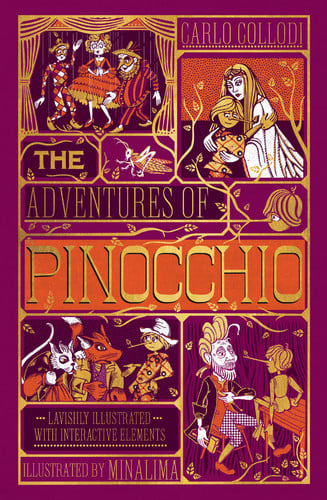
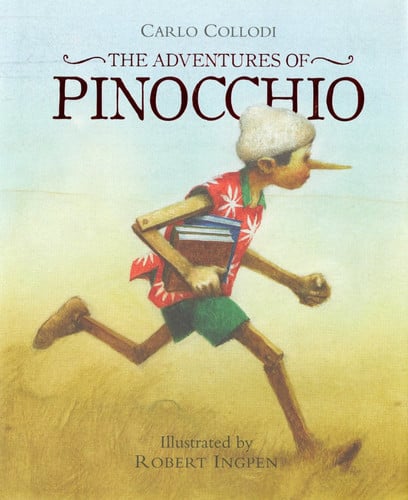
Reviewers found this book to be a generally enjoyable, sweet, and heartwarming experience, often described as a delightful treat. Many praised the physical edition for its beauty, specifically noting the lovely drawings, great artwork, and a velvety cover that enhances its appeal. For those with a nostalgic connection to the story, particularly the classic film version, the book evoked fond childhood memories and added a special sentimental value.
Disliked
However, some readers felt that the book's brevity led to certain scenes being glossed over, simplified, or even omitted compared to the original story or its well-known film adaptation. This lack of detail left a few wishing for a more comprehensive narrative. Additionally, some reviewers indicated that while they still found it enjoyable, the book might be more ideally suited for a younger audience, suggesting it wasn't perfectly tailored for older readers.
In short
Overall, the book appears to be a charming and visually appealing rendition of a beloved tale. Despite the noted simplifications in its storytelling, its inherent sweetness and beautiful presentation make it a delightful read. This book would be particularly well-suited for younger readers, fans who appreciate a concise and heartwarming version of the story, or those seeking a nostalgic trip back to their childhood, especially if they have a strong affection for the classic animated film.