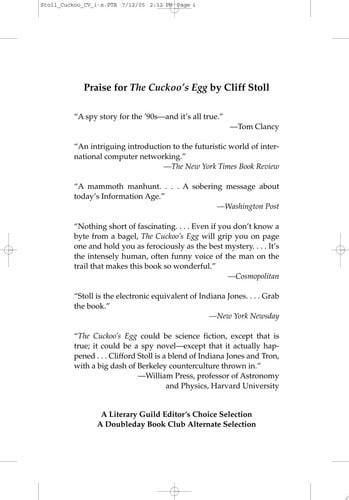
The reviews overwhelmingly praise this book as an exciting and engaging true story that reads like a spy thriller or detective novel. Many readers were captivated by the cat and mouse chase, finding it addictive and a genuine page-turner. A significant highlight is the unique historical insight it offers into the nascent days of the internet and computer security in the 1980s, providing a fascinating glimpse into the "wild west" era of computing, the Arpanet, and early cyber espionage. Reviewers commend the author's remarkable persistence, ingenious methods, and scientific approach to tracking the intruder, often with little support from authorities. The book is also lauded for its accessibility, with complex technical concepts explained clearly and simply, making it understandable for non-technical audiences. For many, its status as a true story makes the narrative even more compelling and relevant.
Disliked
Despite the widespread enjoyment, several common criticisms emerge. A frequent complaint centers on the book's pacing, with many finding the middle section to be repetitive, long-winded, or tedious. This part of the narrative, detailing the continuous cycle of tracking the hacker, encountering obstacles, and seeking assistance, sometimes left readers feeling frustrated by the slow progression. Another recurring point of contention is the author's inclusion of personal anecdotes and reflections, which some reviewers found intrusive, boring, or distracting from the core story of the hunt. Certain readers also expressed annoyance with the author's perceived self-consciousness or philosophical musings, feeling they detracted from the narrative's focus. Additionally, while the historical context is valued, some readers, especially those with advanced technical knowledge or on rereads, felt the technology discussed was dated, and a few found the ending to be somewhat underwhelming after the prolonged build-up.
In short
Overall, the book is highly recommended, with most reviewers, even those with reservations, expressing appreciation for its unique contribution. It is particularly well-suited for computer enthusiasts, programmers, and anyone interested in the foundational history of the internet, cybersecurity, or early computing. Readers who enjoy true crime, spy thrillers, or detective stories will likely find the narrative compelling. Furthermore, those seeking a nostalgic trip back to the dawn of the digital age or who appreciate a meticulous, scientific approach to problem-solving will find much to enjoy. However, readers who prefer fast-paced narratives, are uninterested in technological history, or dislike authors' personal reflections interwoven with factual accounts might find certain sections challenging. Ultimately, it stands as a significant and often delightful read, capturing a pivotal moment in technological history.