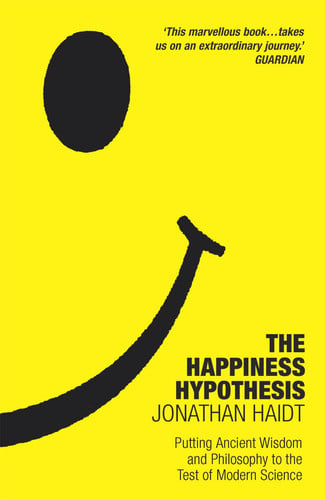
A profound journey begins, not into distant lands, but into the very architecture of the human mind, seeking to bridge the chasm between the timeless insights of ancient sages and the cutting-edge discoveries of modern psychology. The quest is for happiness, a state often misunderstood, and its true nature is unveiled through a series of "Great Ideas," each a hypothesis tested against the crucible of science.
At the heart of this exploration lies the vivid metaphor of the mind as a rider atop an elephant. The rider, our conscious, rational self, believes it is in control, holding the reins and charting the course. Yet, beneath it lumbers the massive elephant, representing our automatic, emotional, and intuitive processes – far more powerful and often dictating the true direction. The rider can only guide, coax, or even rationalize the elephant's chosen path; true progress and inner peace arise only when these two disparate forces find a way to cooperate, when the rider understands the elephant's true motivations and helps steer it toward what genuinely nourishes it.
The pursuit of happiness, it turns out, is not merely an internal affair, nor is it solely dependent on external fortune. Instead, it is revealed to be a delicate equation: happiness is influenced by a genetic set point, external life conditions, and the voluntary activities we choose to engage in. While our biological blueprint accounts for a significant portion, and some circumstances indeed matter - like avoiding noise, commuting, or maintaining a sense of control - it is in our deliberate actions and choices that we find profound leverage.
Among the most vital external conditions for flourishing are our connections to others. Humans are not solitary creatures, but ultra-social beings, wired for reciprocity and attachment. The bonds of love, friendship, and community are not mere pleasantries; they are fundamental requirements for mental well-being, providing a constant source of joy and resilience. To lose these connections is to sever a vital artery of happiness, confirming that true contentment blossoms "between" people, not just within them.
Ancient philosophers, from Aristotle to Buddha, understood that a life well-lived was inextricably linked to virtue. Modern insights affirm this wisdom: cultivating virtues such as honesty, kindness, courage, and temperance does not just make one a "good" person, but a happier one. These are not abstract ideals but practical pathways to a coherent and fulfilling existence, fostering internal harmony and positive interactions with the world.
Furthermore, the experience of "flow" - a state of complete absorption and engagement in a challenging activity that perfectly matches one's skills - offers profound, lasting satisfaction far beyond fleeting pleasures. This deep engagement, particularly when found in meaningful work, provides a sense of purpose and progress. Even adversity, though painful, holds a peculiar power. What does not kill you can indeed make you stronger, wiser, and more compassionate, as facing and overcoming significant challenges often leads to post-traumatic growth, revealing hidden strengths and shifting priorities toward what truly matters.
Beyond the personal and social, there lies a human need for something larger than oneself, a sense of sacredness or divinity, whether framed religiously or secularly. This "vertical dimension" of existence, often experienced through awe, moral elevation, or a feeling of being part of something vast and eternal, provides a crucial layer of meaning and coherence. It is this cross-level coherence - the alignment between one's physical, psychological, and sociocultural worlds - that ultimately underpins a deeply fulfilling life.
Thus, the journey concludes not with a simple answer, but with a tapestry of interwoven truths. Happiness is not a discovery of a single secret, but an ongoing dance between our rational and emotional selves, nurtured by genuine connections, fortified by virtuous living, invigorated by meaningful engagement, and enriched by a sense of purpose that transcends the individual. It is about getting the conditions right, both within and around us, and then allowing the natural human capacity for flourishing to emerge.