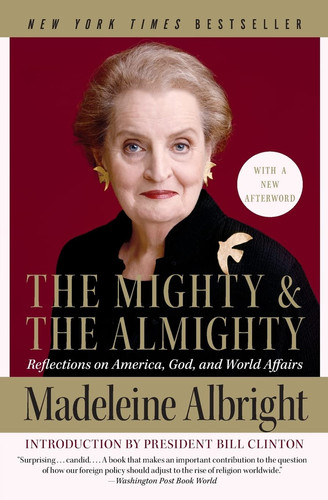
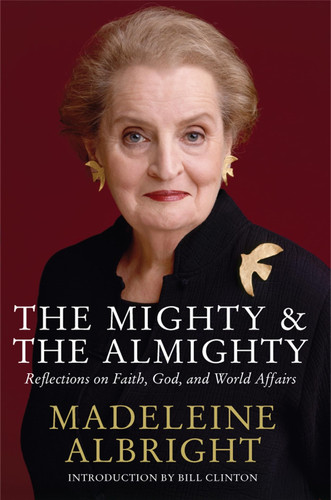
Positives Madeleine Albright's book is widely praised by reviewers for its engaging and informative exploration of religion's role in global affairs. Many readers found it difficult to put down, commending her ability as a former US Secretary of State and seasoned diplomat to explain complex historical and political issues clearly and succinctly, without condescension. Her deep knowledge, drawn from extensive international experience and academic background, is consistently highlighted as a major strength, making the book a compelling read for understanding the intersection of faith and foreign policy. Reviewers appreciated her candor, thoughtful analysis, and passionate yet accessible tone, particularly in shedding light on topics such as the US's relationship with the Muslim world and the post-9/11 geopolitical landscape. Her insights into fostering tolerance and presenting religion as a potential force for reconciliation rather than conflict were also frequently lauded.
Negatives Despite its strengths, the book receives some criticism, primarily concerning its timeliness and depth. Several reviewers noted that, having been published in 2006, certain analyses and predictions have become dated, making parts feel like a "time capsule" that doesn't account for subsequent global developments. For readers already well-versed in politics and Middle Eastern affairs, some found the content to be a rehash of familiar information, suggesting it lacked new insights. Criticisms also include a perceived limited focus, primarily on Abrahamic religions, with some wishing for a broader discussion. A few readers felt that the book occasionally demonstrated a subjective weighting of facts or omitted crucial context in certain historical discussions, leading to a less balanced narrative. Additionally, some found the tone occasionally self-righteous or biased against certain religious viewpoints, and others felt the analysis of specific regions lacked sufficient depth.
Conclusion Overall, the book is largely considered a valuable and thought-provoking contribution to understanding world affairs. While acknowledging its limitations regarding contemporary relevance and occasional analytical depth, many reviewers still recommend it as an important read. It is particularly suited for individuals new to the subject of religion's influence on diplomacy, those seeking an accessible overview of US foreign policy in the post-9/11 era, or anyone interested in the historical context of global conflicts and interfaith relations. Readers who appreciate the perspective of an experienced diplomat and educator on complex international issues, and who are willing to consider the book within its original publication context, will likely find it an enlightening and worthwhile read.