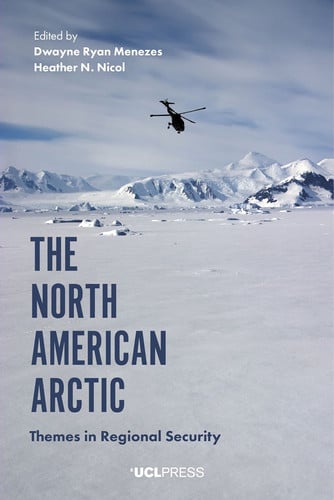
The North American Arctic is undergoing a profound transformation, ushering in a new era of security dynamics that reshape relationships across the circumpolar North. The traditional understanding of security, once solely fixated on military might and territorial defense, has evolved dramatically, now encompassing a broader spectrum of human-centered concerns and a heightened sense of "domain awareness." This shift compels a re-evaluation of established norms and practices as the region grapples with emerging threats and opportunities.
The challenges confronting this vast and critical region are multifaceted, impacting Alaska, the Canadian territories of Yukon, Nunavut, and the Northwest Territories, Greenland, and their interactions with powerful neighbors like Russia. As the ice recedes and access increases, new regionally specific threats arise from a complex interplay of environmental changes, intensified human activity, and evolving geopolitical tensions. These developments demand a fresh lens through which to assess their impact, from the intimate scale of local communities to the broader national and regional arenas.
A significant aspect of this evolving security landscape is the redefinition of borders and sovereignty. Where once state governments held exclusive dominion, border governance has become a multi-stakeholder endeavor, increasingly involving Indigenous communities and the private sector. This reflects a growing recognition of the unique perspectives and vital roles played by those who inhabit the Arctic, whose traditional ways of life and knowledge are integral to understanding and managing the region's future.
The influence of climate change looms large, creating new environmental hazards such as more severe weather patterns, increased floating ice, and permafrost degradation, all of which intersect with growing human activity. These physical changes contribute to a more complex and potentially unstable environment, demanding innovative approaches to safety and sustainability. The opening of the Northwest Passage, for instance, presents both economic prospects and heightened security concerns, drawing the attention of both Arctic and non-Arctic nations.
Geopolitical competition, particularly involving Russia, further complicates the security equation. While some historical rhetoric may have overstated the immediate military threat in the North American Arctic, Russia's continued investment in its European Arctic military infrastructure and its strategic posturing necessitate vigilance. The risks extend to nuclear deterrence, conventional capabilities, and the potential for low-intensity warfare operations, such as disruptions to critical undersea infrastructure, particularly in strategic chokepoints like the Bering Strait.
Amidst these challenges, cooperation with allies and partners is paramount. The security of the North American Arctic is intrinsically linked to the collective efforts of the "Arctic/NATO 7" and regional partners. Ensuring homeland security and forward defense requires external engagement, fostering domain awareness, strengthening deterrence, increasing presence, and streamlining operations. This collaborative approach underscores a commitment to integrated deterrence and burden-sharing among allies, vital for navigating the intricate security relationships of the twenty-first century Arctic.