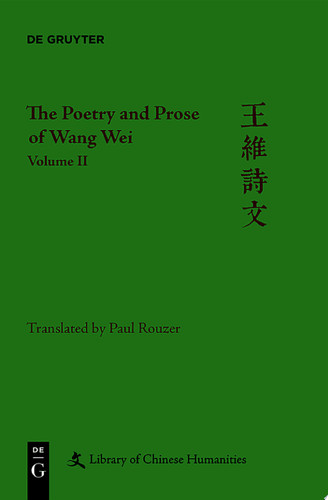
Step into a world where the rustling of bamboo holds a sermon, and the gleam of a mountain stream mirrors the quietude of the soul. Here, the verses unfold with a painter's eye, capturing fleeting moments of light on moss, the distant echo of human voices in an empty valley, or the solitary flight of a bird against a vast sky. These are not merely descriptions; they are invitations to a deeper perception, where the external landscape becomes a pathway to inner stillness, a reflection of the interconnectedness between humanity and the natural world.
The journey through these poems often begins amidst tranquil landscapes, far removed from the clamor of courtly life, though the shadow of official duties and political turbulence occasionally brushes the edges of the mind. One finds oneself wandering through verdant mountains and by winding rivers, observing the changing seasons, the delicate balance of life in a secluded retreat. The imagery is concrete, yet imbued with an intuitive sense of the unreality of sensory experience, a quiet suggestion that all phenomena are, in their essence, empty and interdependent.
As the verses progress, a profound philosophical undertone emerges, deeply rooted in Chan Buddhist principles. The idea of "emptiness" is not a void, but a state of detachment and simplicity, where the self is silenced, allowing the world to manifest in its pure, unconditioned form. One witnesses the poet's own emotion, always restrained, as he bears selfless witness to the gentle unfolding of nature - a waterfall cascading into a deep pool, moonlight filtering through pine trees, or the quiet solitude of a deer enclosure where only echoes betray a human presence.
Beyond the immediate beauty of nature, these writings also offer glimpses into a life shaped by profound spiritual seeking. There are moments of quiet contemplation, of burning incense and practicing meditation, of association with Buddhist and Daoist monks. This commitment to the Way inspires many of the reflections, lending a spiritual depth to the observations of the mundane, transforming a simple scene into a meditation on existence.
The prose pieces, too, open windows into the broader life and mind of this singular figure. One encounters memorials and reports, letters and records, prefaces and eulogies, each revealing the cultivated intellect and refined sensibility of a man who navigated both the rigorous conventions of court and the profound quiet of his inner world. These texts, whether commissioned compositions or personal reflections, often echo the themes of the poetry, displaying a consistent striving for simplicity, integrity, and spiritual truth in all expressions.
Through these collected works, a comprehensive understanding of a master emerges. He is a poet who reacted against the prevailing styles of his time, daringly experimental, yet always striving for an essential clarity. His words, whether in the compact 'jueju' form or in more expansive prose, aim to evoke feelings of tranquility and reflection, creating a unique vision of the world that has resonated with generations.
Ultimately, stepping into this world is to experience a gentle invitation to slow down, to observe with greater attentiveness, and to find a quiet harmony with the rhythms of nature and the deeper currents of philosophical thought. It is an encounter with a profound artistic and spiritual legacy, where the beauty of the fleeting moment is celebrated, and the search for inner peace is paramount.