
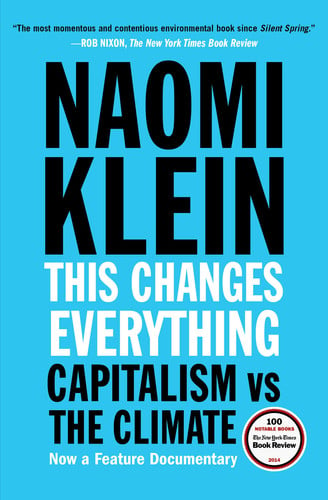
This Changes Everything Capitalism Vs. The Climate
by Naomi Klein
8.32 / 10 28K ratings
- Language
- English
- Published
- 2014
- Publisher
- Simon and Schuster
- Pages
- 566
- ISBN
- 9781451697384
Forget what you think you know about global warming. Naomi Klein argues that the climate crisis is not merely an environmental issue but a direct consequence of deregulated capitalism and its pursuit of endless growth. This book presents the case that the actions necessary to reduce emissions fundamentally conflict with the reigning economic ideology, which prioritizes exploitation of resources over ecological health.
Klein examines the forces preventing meaningful climate action, from climate change deniers to the powerful fossil fuel industry and the limitations of some mainstream environmental initiatives. She contends that confronting climate change offers a profound opportunity to transform our failing economic system, address gaping inequalities, reimagine democracies, and rebuild local economies, leading to a more just and sustainable world. This Changes Everything is a call to recognize the existential challenge of our era as a catalyst for fundamental societal change.
Klein examines the forces preventing meaningful climate action, from climate change deniers to the powerful fossil fuel industry and the limitations of some mainstream environmental initiatives. She contends that confronting climate change offers a profound opportunity to transform our failing economic system, address gaping inequalities, reimagine democracies, and rebuild local economies, leading to a more just and sustainable world. This Changes Everything is a call to recognize the existential challenge of our era as a catalyst for fundamental societal change.
Other editions (21)




Listen to the summary Narrated summary
The melting tarmac beneath the wheels of a grounded plane, a stark image, signals a truth we can no longer ignore: the climate crisis is not merely an environmental concern to be addressed with minor adjustments, but a profound alarm demanding a radical transformation of our entire economic system. For decades, we have been lulled into believing that the market would save us, that technological fixes or individual consumer choices could avert catastrophe. Yet, as the storms rage and the droughts deepen, it becomes clear that this approach has only dug us deeper into the mire.
The core of the matter lies in the reigning ideology of our time: deregulated capitalism. This system, with its insatiable imperative for relentless growth and exploitation, treats the Earth as an endless resource to be plundered and its capacity to absorb pollution as limitless. It is this "extractivist" worldview, viewing nature as a vending machine rather than a living system, that is fundamentally incompatible with ecological sensibility and climate justice. We have not taken the necessary steps to lower emissions because those steps directly conflict with the very tenets of this economic model, a model held in a stranglehold by an elite minority whose interests are deeply intertwined with the fossil fuel industry.
Consider the powerful grip of the fossil fuel corporations, their political influence, and their relentless expansion into destructive practices like fracking and tar-sand oil extraction. These entities, driven by profit, actively obstruct meaningful climate action, lobbying against regulations and prioritizing short-term gains over the planet's health. Even some mainstream environmental organizations, by seeking partnerships with these very industries or promoting convoluted market-based schemes, have inadvertently legitimized a system that continues to make things worse. The delusion that green billionaires or geoengineering will offer a miraculous escape only distracts from the systemic changes truly required.
However, the urgency of this crisis is not a call for grim penance, but rather a profound opportunity, a gift even, to mend our broken economic and cultural priorities and to heal long-festering historical wounds. It is a chance to simultaneously reduce gaping inequalities, re-imagine our democracies, and rebuild our local economies. The path forward demands a fundamental shift away from the "free market" ideology, a restructuring of the global economy, and a remaking of our political systems.
This transformation is already taking root in the inspiring movements emerging worldwide, a decentralized network often referred to as "Blockadia." These are communities on the front lines, refusing to be sacrifice zones for further fossil fuel extraction, and instead actively building the next, regeneration-based economies. Indigenous land rights, for instance, prove to be one of the most potent tools in this struggle, as many of the planet's last untapped fossil fuel reserves lie on their traditional territories, alongside prime locations for renewable energy.
The solutions lie not in incremental adjustments, but in large-scale government intervention and investment in green jobs, infrastructure, and renewable energy. This means democratically controlled renewable energy infrastructure, eco-agriculture, international regulations, and tax models that redirect funds from polluting industries into green public projects. It's about breaking every rule in the "free-market" playbook: reining in corporate power, rebuilding local economies, and reclaiming our democracies. The fight against climate change is inextricably linked to the struggle for economic and social justice, demanding a grassroots mass movement that weaves together various strands of existing social and political struggles. This changes everything, and in this radical shift, lies our best chance for a safer, more just, and truly sustainable future.
What other readers say
Liked
Reviewers widely praise Naomi Klein's This Changes Everything as an essential and powerful book for understanding the critical challenges of the 21st century. Many commend her engaging and accessible journalistic style, which effectively illuminates complex structural analyses and often censored stories of struggle. The book is lauded for its thorough research and innovative approach, connecting climate change directly to the unchecked power of corporations, wealth inequality, and the prevailing neoliberal economic system. Readers found it to be a compelling call to action, eye-opening in its articulation of why a fundamental restructuring of the global economy is necessary to tackle the climate crisis. It inspires a demand for change, offering hope and potential pathways through grassroots movements, indigenous leadership, and community-based initiatives that prioritize regeneration over extractivism. The book is seen as timely, crucial, and a generous compilation of information, encouraging readers to question the greed-driven consequences of current economic models and recognize the collective power to forge a sustainable future.
Disliked
Despite its strengths, the book faces several criticisms. Some reviewers found its length and dense presentation challenging, leading to a sense of depression or overwhelming despair. It is often described as "preaching to the choir," unlikely to sway those already skeptical of climate change or critical of its proposed solutions. Klein’s radical stance on wealth redistribution and her suggestion of reverting to a 1970s lifestyle are contentious, with some critics interpreting her proposals as totalitarian or impractical without clear political implementation. Concerns were raised about the book's objectivity, with accusations of filtering information through a specific ideological lens and misrepresenting scientific data on extreme weather. Reviewers also noted that the book is light on the pure science of climate change, focuses heavily on Western examples, and at times repeats its points without sufficient expansion on crucial topics like the food system or militarism. Furthermore, some felt the critique of capitalism was not deep enough, or that it offered vague solutions without concrete economic alternatives, leading to confusion about its ultimate message.
In short
Ultimately, This Changes Everything is regarded as an exceptionally important and impactful book, delivering a potent message that resonates deeply with many readers. It successfully reframes the climate crisis not merely as an environmental issue, but as a profound conflict between our current economic paradigm and the planet's ability to sustain life, necessitating deep societal transformation. The book’s strength lies in highlighting the potential of collective action and resistance, offering a hopeful, albeit challenging, vision for the future. This book is highly recommended for readers who are already concerned about climate change and are open to exploring radical, systemic critiques of capitalism and its alternatives. It will particularly appeal to environmentalists, activists, and those interested in the intricate economic and political dimensions of the climate crisis, providing inspiration for collective engagement and a renewed sense of purpose.
No reviews yet. Be the first.