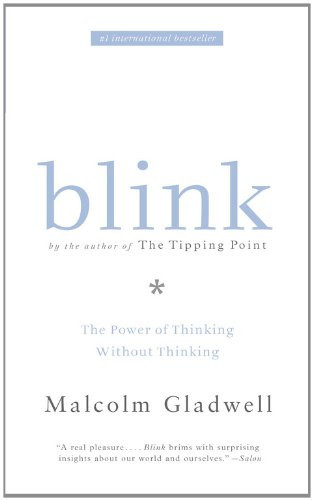
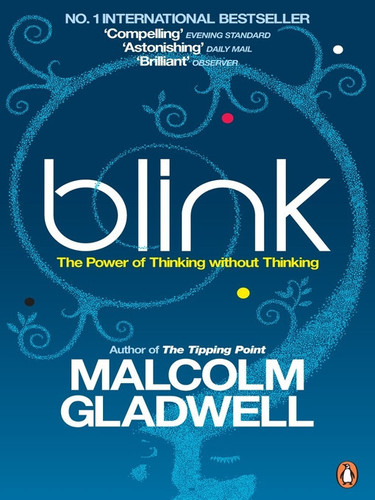
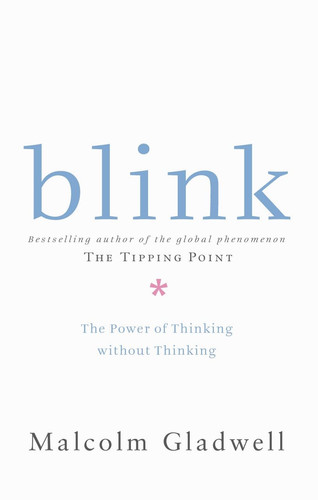
A Greek statue, a kouros, stands before a gathering of art experts. They are asked to assess its authenticity. Some pore over documents, analyze historical context, and meticulously examine every detail. Others simply glance at it, and a strange unease settles within them. They can't quite articulate why, but something feels wrong. This immediate, almost visceral reaction, this "blink" of intuition, often proves to be remarkably accurate, revealing a forgery that extensive, conscious analysis failed to detect. This is the essence of thin-slicing: our ability to make rapid, often accurate judgments based on very little information.
Our minds possess an "adaptive unconscious," a sophisticated internal computer that operates beneath the surface of our conscious awareness. It constantly processes vast amounts of data, sifting through experiences and drawing conclusions in the blink of an eye. This unconscious faculty allows us to navigate complex situations with surprising efficiency, making snap judgments that are not merely guesses, but informed decisions born from accumulated knowledge and pattern recognition. This rapid cognition is crucial for survival and daily functioning, enabling us to react swiftly without the burden of lengthy deliberation.
Consider the "Love Lab," where psychologist John Gottman can predict with astonishing accuracy, after just a few minutes of observing a couple, whether they will stay together. He isn't relying on complex questionnaires or deep psychological dives in that moment. Instead, he's thin-slicing, picking up on subtle cues, micro-expressions, and patterns of interaction, particularly the presence of contempt, defensiveness, stonewalling, and criticism, which are powerful indicators of a relationship's health. Similarly, a tennis coach might instinctively know a player is about to double-fault before the ball is even served, or a firefighter might sense a hidden danger in a burning building, prompting an immediate evacuation that saves lives. These are not mystical powers, but rather the highly trained adaptive unconscious at work.
However, the power of thinking without thinking is not without its perils. Our rapid judgments can be swayed by unconscious biases and stereotypes, leading to disastrous outcomes. The tragic killing of Amadou Diallo, where four police officers misinterpreted a wallet for a gun, stands as a stark reminder of how quickly and fatally snap judgments can go awry when influenced by implicit prejudice. The "Warren Harding Error" illustrates how superficial traits, like an imposing appearance, can lead us to perceive leadership qualities where none truly exist, demonstrating how easily our unconscious can be misled by irrelevant information.
Furthermore, the conventional wisdom that more information always leads to better decisions is often a fallacy. In fact, an abundance of data can sometimes hinder effective decision-making, leading to "analysis paralysis." Emergency room doctors, for instance, initially struggled to diagnose heart attacks due to an overwhelming number of contributing factors. A simpler model, focusing on just a few critical variables, proved to be far more accurate and efficient. Our conscious attempts to rationalize and explain our intuitive decisions can also sometimes obscure the true insights of our adaptive unconscious.
The key lies in understanding when to trust our instincts and when to be wary. While our unconscious reactions emerge from a "locked room" we cannot directly peer into, we are not entirely helpless. Through conscious awareness and deliberate training, we can enhance our thin-slicing abilities. By recognizing the contexts in which our intuition excels - often situations where we possess considerable expertise - and by acknowledging the situations where biases might subtly distort our perceptions, we can cultivate a more balanced approach to decision-making, harnessing the incredible power of the blink while mitigating its potential pitfalls.