Add to library
You don't have any lists yet. Create one in My Library.
Go to My LibraryAdd to library
You don't have any lists yet. Create one in My Library.
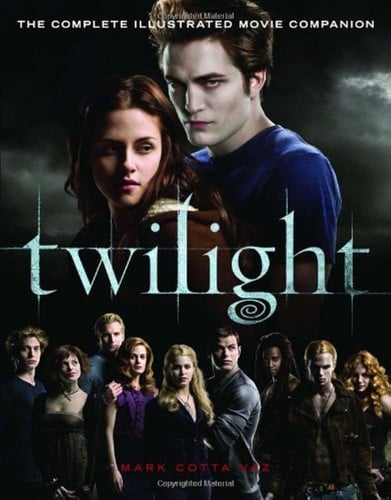
Go to My LibraryTwilight: The Complete Illustrated Movie Companion
- Language
- English
- Published in
- Publisher
- Little, Brown Books for Young Readers
- Pages
- 144
- ISBN
- 9780316043137
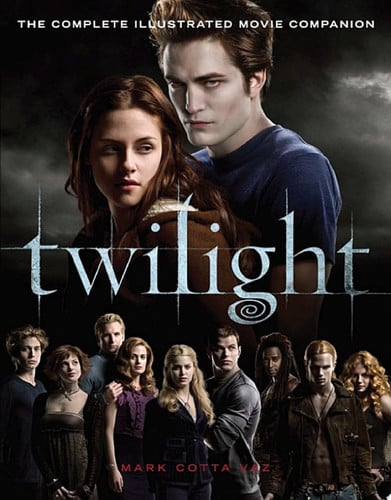
Inside, readers will find interviews with actors and filmmakers, providing personal insights into the filmmaking process. The book also showcases concept art, storyboards, and details on the special effects used to create the film's memorable moments. For any fan of the movie, this guide presents an opportunity to explore the cinematic world of Twilight in greater depth and discover the creative decisions that shaped the on-screen story.
Subjects
Original edition details
Other editions (1)
The challenge was to bring this world to life, to ground its fantasy in a visceral reality. The journey began in Forks itself, absorbing the atmosphere of the rainiest place in the continental United States. But for the practicalities of filming, the production found its home in the towns and forests surrounding Portland, Oregon. The weather, true to the story's spirit, became a character in itself - a relentless force of freezing, horizontal rain, hail, and snow that seeped into every part of the shoot. “The rain was horrifying, you have no idea!” makeup artists would recall. On the rare sunny days, crews hosed down the streets to maintain the gloomy continuity. This raw, elemental struggle infused the film with a kinetic energy, a feeling of being caught in something wild and uncontrollable.
To capture the vampires' supernatural abilities, the approach was old-school and physical. There were no fangs or transformations into bats; instead, their power was expressed through breathtaking speed and strength, achieved with intricate wire work and the “Hong Kong style” of stunt coordinator Andy Cheng. When a classmate's van careens toward Bella in the school parking lot, Edward doesn't just stop it with a digital effect - he physically holds back a real vehicle rigged on casters and air bags, his hand denting a specially crafted aluminum door. Even the signature sparkle effect was a puzzle. The goal was something magnificent and terrifying, not a Las Vegas spectacle. After many failed tests, the task fell to Industrial Light & Magic, who developed an optical effect where light seemed to fracture across Edward's skin like a prism, a beautiful and alien reflection rather than a generated glow.
The Cullen family's aesthetic had to be just as distinct. Their world was imagined as one of dark and cold, of things caught in ice and arrested in time. Instead of stereotypical black, their costumes were designed in a palette of cool blues, creams, and grays that made their skin appear even more ethereal. Each family member wore a custom crest - a coat of arms signifying perpetuity and courage - in their own personal way: on a wrist cuff for Edward, a ribbon choker for Alice, a ring for Dr. Cullen. Their home, a stunning modern structure of glass and wood nestled in the forest, was dressed with eclectic treasures from their long lives. In Edward's room, antique radios and journals piled high spoke of a lonely, introspective soul. On the main staircase, a piece of abstract art revealed itself to be a collection of graduation caps - a quiet testament to the many times they had passed as mortal teenagers.
Nowhere was the Cullens' otherworldly power more vividly displayed than in their private pastime: vampire baseball. In a remote meadow high in the mountains, they played their game under the cover of a raging thunderstorm, the crack of the bat echoing like cannon fire. To capture the spectacle from Bella's awestruck perspective, the action was shot with a special “Crazy Horse Rig,” a dual-camera setup that allowed for seamless shifts from real-time to extreme slow motion in a single take. Actors and stunt doubles were flown on a thousand-foot-long high line, running and sliding across the field at impossible speeds while computer-generated baseballs zipped through the air.
The game is violently interrupted by the arrival of three nomadic vampires: Laurent, Victoria, and the tracker, James. Unlike the sophisticated Cullens, these are true predators who live only to feed. Dressed in a rock-and-roll collection of leather and trophies from their victims, they move with a sinister grace, gliding across the field on a “Magic Carpet” rig that creates the illusion of inhuman speed. When James, a hunter who revels in the sport of the chase, catches Bella's scent, a deadly game begins. The hunt is on, and the Cullens must protect the human girl who has become part of their family.
The final showdown takes place in the mirrored interior of a dance studio, a nod to the classic film noir climaxes of *The Lady from Shanghai* and *Enter the Dragon*. The fight choreography was dubbed “animal style,” a brutal, visceral clash of biting and tearing as Edward unleashes his full protective fury. Stunt doubles were slammed into breakaway mirrors and balsa wood floors, the chaos captured by five cameras moving through the reflective space. Here, the raw emotion of the story erupts into terrifying violence as James attacks Bella, drawing her blood and sealing his own fate.
The production's own battle against the elements reached its climax on the shores of La Push, the Quileute reservation where ancient secrets of werewolves are whispered on the wind. The day of the beach shoot became legendary among the crew as their “worst day ever.” Equipment had to be hand-carried across slippery rocks in a freezing, forty-five-degree-angle downpour that destroyed camera monitors and soaked through every layer of protective gear. Yet, through it all, they got the shot, a testament to a shared refusal to surrender.
In the final weeks, all the pieces came together. The film was given its signature cool, desaturated look, punching up the greens of the Pacific Northwest and crushing the blacks. The composer delivered the haunting love theme, “Bella's Lullaby,” a piano piece that actor Robert Pattinson would play himself on screen. The story ends, as it should, at the high school prom. Filmed at an inn overlooking the Columbia River Gorge in the freezing cold, Edward and Bella share a final dance. Placed on a giant, slow-spinning turntable, they move as if in their own magical, brightly lit bubble, a young girl and a vampire forever seventeen, bound by a love that is enough for forever.
No discussions yet for this book.
Delete Discussion
Are you sure you want to delete this discussion? This action cannot be undone.
Rating Sources
The reviews frequently praise the book for its visual appeal, highlighting the gorgeous, stunning, and amazing glossy pictures. Many readers found the experience of holding these high-quality images in their hands superior to viewing them online. Beyond the visuals, the book is lauded as a highly informative and extremely thorough exploration of the "making-of" process for the Twilight movie. It delves into minute details, offering extensive behind-the-scenes insights, including how specific special effects were achieved and the meticulous attention given to prop placement and set design. Readers appreciated the smoothly integrated interviews with the director and producers, providing a comprehensive look at the production and the dedication of the crew. The book is celebrated for bringing the film's world to life and is considered a must-have for any ardent fan of the Twilight phenomenon.
While largely positive, some reviews pointed out a few drawbacks. A common sentiment was a desire for more interviews with the cast members and author Stephenie Meyer, with some feeling the book leaned too heavily on technical filmmaking aspects rather than personal experiences. For readers not inherently interested in the mechanics of movie production, the detailed explanations of camera types, wiring, and scene-shooting techniques could become "painfully boring" or "dry." Some felt that certain behind-the-scenes photos where actors were caught off-guard or mid-blink could have been omitted. There was also a comment suggesting the book's appeal to non-film enthusiasts might rely heavily on the "Twilight" name itself. One reviewer noted that some information might not make complete sense if read before viewing the movie, and another mentioned that the writing style, while informative, could be perceived as somewhat dry.
Overall, the book is seen as a valuable companion for those deeply invested in the Twilight movie, offering a rich, visual, and detailed dive into its creation. It is highly recommended for devoted fans of the film and those with an interest in the technical and logistical aspects of moviemaking, including aspiring filmmakers or film buffs. The book provides a greater appreciation for the tremendous effort and artistry involved in bringing the story to the screen. However, readers primarily seeking character insights or extensive personal anecdotes from the main cast and author might find it less fulfilling. It is best suited for individuals who enjoy behind-the-scenes content, production details, and high-quality photography related to the Twilight film.
No reviews yet. Be the first to review this book!
Delete Review
Are you sure you want to delete this review? This action cannot be undone.


