Add to library
You don't have any lists yet. Create one in My Library.
Go to My LibraryAdd to library
You don't have any lists yet. Create one in My Library.
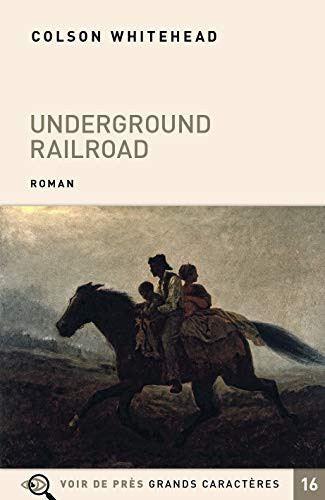
Go to My LibraryUnderground railroad
- Language
- French
- Published in
- Publisher
- Voir de près
- Pages
- 640
- ISBN
- 9782901096825
Cora's journey is a relentless odyssey, a state-by-state flight from a merciless slave catcher hot on her heels. Each stop along the tracks reveals a different world, a new vision of America and its insidious machinery of oppression. What unfolds is more than one woman's ferocious will to escape the horrors of bondage; it is a kinetic and shattering exploration of the unfulfilled promises of the past and a powerful meditation on the shared history that defines the present.
Subjects
Original edition details
Other editions (37)

The Underground Railroad A Novel
2018 • Knopf Doubleday Publishing Group
English

The Underground Railroad (Pulitzer Prize Winner) (National Book Award Winner) (Oprah's Book Club) A Novel
2016 • National Geographic Books
English

El Ferrocarril Subterráneo / the Underground Railroad
2017 • Penguin Random House Grupo Editorial
Spanish
The Underground Railroad A Novel
2017 • Dutton Books
French

The Underground Railroad
2016 • Fleet
English
Other editions
The Underground Railroad A Novel
2018 • Knopf Doubleday Publishing Group
English
The Underground Railroad (Pulitzer Prize Winner) (National Book Award Winner) (Oprah's Book Club) A Novel
2016 • National Geographic Books
English
El Ferrocarril Subterráneo / the Underground Railroad
2017 • Penguin Random House Grupo Editorial
Spanish
The Underground Railroad A Novel
2017 • Dutton Books
French
The Underground Railroad
2016 • Fleet
English

The Underground Railroad
2016 • Fleet
English
The Underground Railroad
2021 • Little, Brown Book Group Limited
English
El ferrocarril subterráneo / The Underground Railroad
2022 • National Geographic Books
Spanish
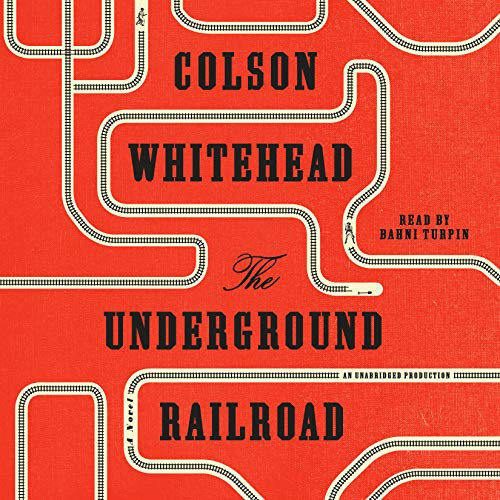
The Underground Railroad (Oprah's Book Club) A Novel
2016 • National Geographic Books
English
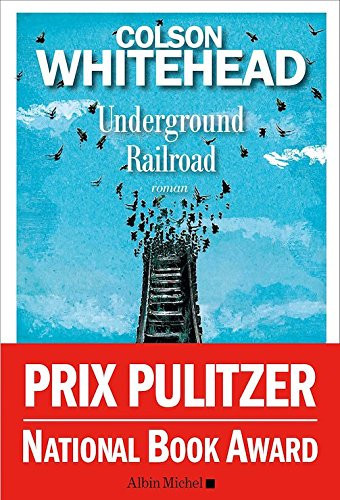
Underground Railroad roman
2017 • Doubleday
French

The Underground Railroad
2018 • Perfection Learning Corporation
English

Underground railroad Roman
2017 • Carl Hanser Verlag
German
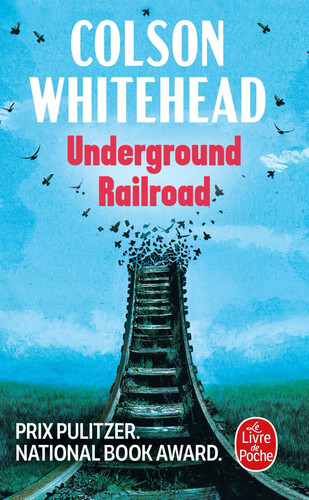
Underground railroad
2019 • LGF/Le Livre de Poche
French
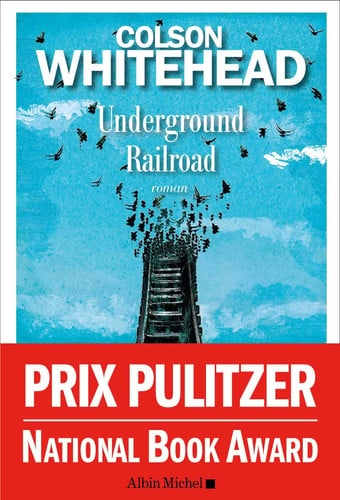
Underground railroad roman
2017 • Albin Michel
French
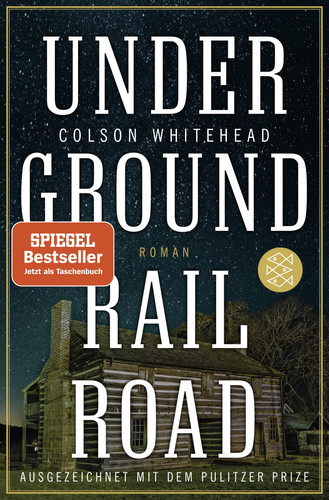
Underground railroad Roman
2019 • FISCHER Taschenbuch
German

Underground Railroad Roman
2019 • FISCHER Taschenbuch
German
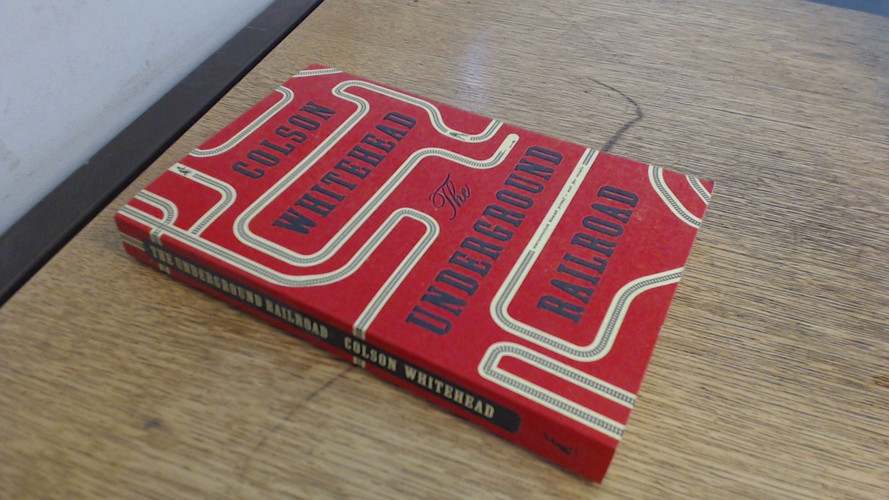
The Underground Railroad A Novel
2016 • Doubleday
English

The Underground Railroad
2017 • Little, Brown Book Group Limited
English

The Underground Railroad (Television Tie-in)
2021 • National Geographic Books
English
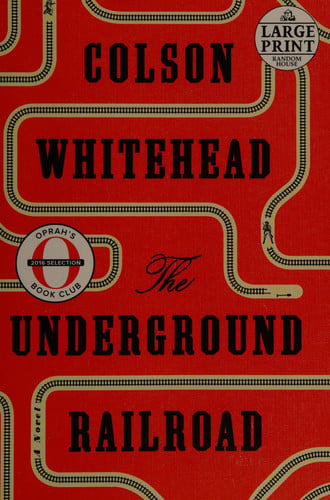
The Underground Railroad (Oprah's Book Club) A Novel
2016 • National Geographic Books
English

The Underground Railroad
2017 • Fleet
English

The Underground Railroad LONGLISTED FOR THE MAN BOOKER PRIZE 2017
2016 • Little, Brown Book Group
English

The Underground Railroad 10th Anniversary Edition
2016 • Little, Brown Book Group
English
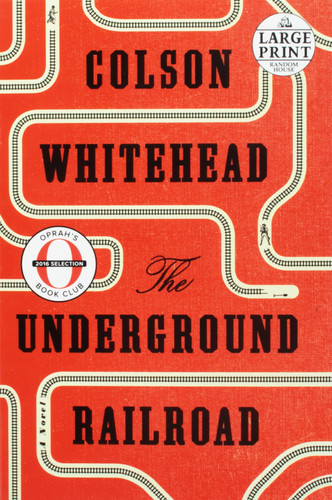
The Underground Railroad A Novel
2016 • Random House Large Print
English
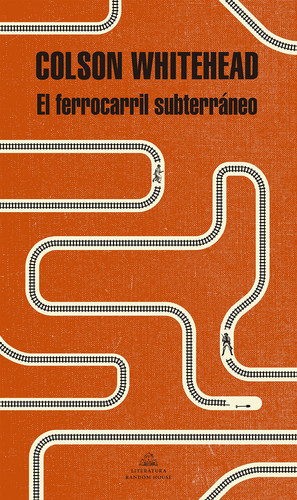
El ferrocarril subterráneo (Literatura Random House) (Spanish Edition)
2017 • LITERATURA RANDOM HOUSE
Spanish
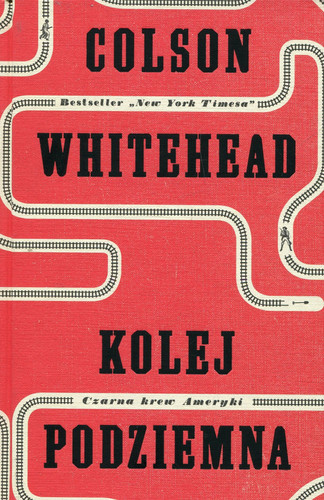
Kolej podziemna czarna krew Ameryki
2017 • Wydawnictwo Albatros
Polish
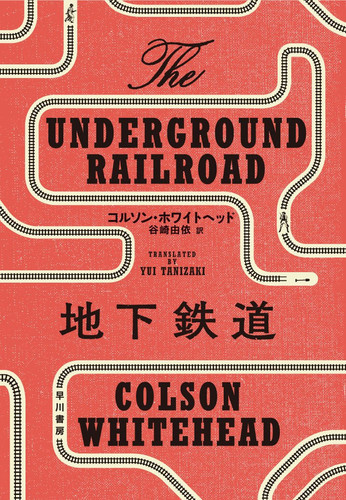
地下鉄道
2017 • 早川書房
Japanese
FERROCARRIL SUBTERRANEO, EL
2018 • LITERATURA RANDOM HOUSE
Spanish
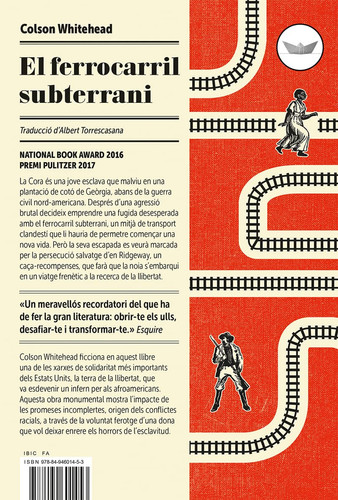
El ferrocarril subterrani
2017 • Periscopi
Spanish

Yeralti Demiryolu
2000 • Siren Yayinlari
Turkish
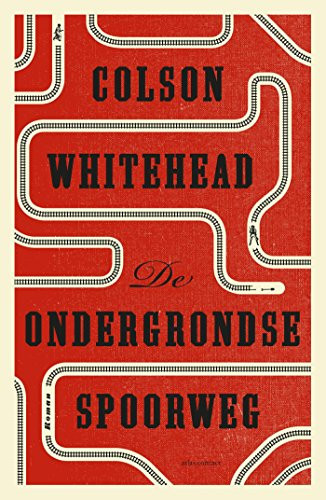
De ondergrondse spoorweg
2018 • Atlas Contact
Dutch
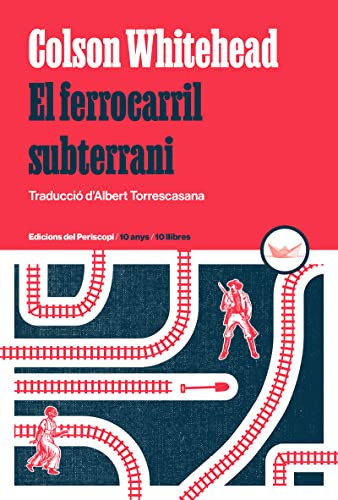
El ferrocarril subterrani
2023 • EDICIONS DEL PERISCOPI
English

La ferrovia sotterranea
2017 • Sur
Italian
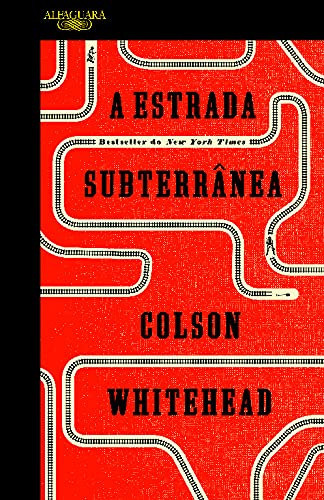
A Estrada Subterrânea (Portuguese Edition)
2017 • Alfaguara Portugal
Portuguese

Korean Books, The Underground Railroad by Colson Whitehead, 언더그라운드 레일로드, 콜슨 화이트헤드
2017 • Generic
Korean
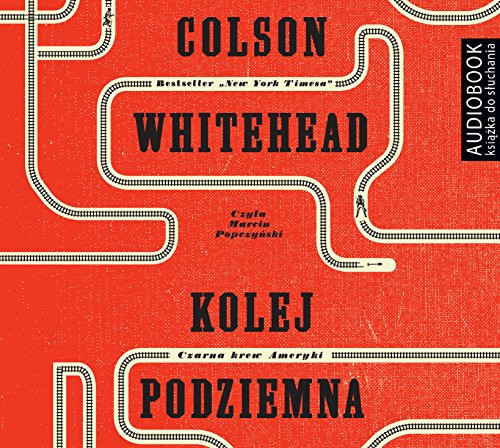
Kolej podziemna. Audiobook
2017 • Biblioteka Akustyczna
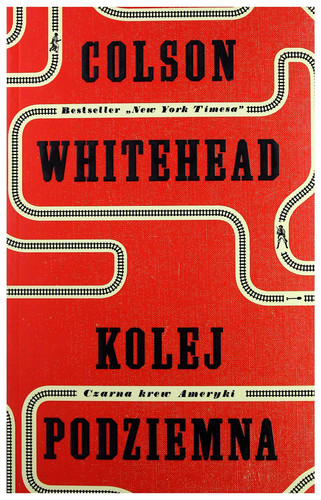
Kolej podziemna czarna krew Ameryki
2017 • Wydawnictwo Albatros
Polish
Their escape is a frantic plunge into the unknown. They are joined by a young friend, Lovey, and together they navigate the treacherous Georgia swamp, a world of black water and grasping roots. But freedom is a fleeting whisper. They are ambushed by hog hunters, who capture Lovey and drag her back to a horrifying fate. In the struggle, Cora accidentally kills a young white boy, turning her and Caesar from simple runaways into murderers with a bounty on their heads. They press on, finally reaching a safe house where the true nature of the underground railroad is revealed: it is no metaphor, but a literal, subterranean network of tracks and tunnels, a secret artery of steam and steel pulsing beneath the poisoned soil of the south.
The train deposits them in South Carolina, a state that presents itself as a bizarre utopia. Here, the government has embarked on a program of “negro uplift,” providing former slaves with jobs, housing in clean dormitories, and education. Cora is given a new name, Bessie, and a position as a domestic. For a time, she allows herself to believe in this new life, even as she is put on display as a living exhibit in a museum's “Scenes from Darkest Africa.” But a sinister truth lurks beneath the state's progressive veneer. The doctors who offer medical care are conducting a vast eugenics experiment, sterilizing Black women without their consent and studying the progression of syphilis in unknowing men. It is a sterile, smiling horror, a plantation of the body and spirit, and Cora knows she must run again.
Fleeing north once more, she finds herself in a place where the pretense of benevolence has been stripped away entirely. In North Carolina, slavery has been abolished, but only by abolishing the Black race. The state has embarked on a campaign of extermination, offering bounties for every free person of color and runaway captured within its borders. The roads are lined with lynched bodies, a gruesome gallery they call the “Freedom Trail,” and every Friday night, the townsfolk gather in the park for a festival that culminates in a public hanging. Cora finds refuge in the cramped attic nook of a reluctant abolitionist couple, Martin and Ethel, watching the world through a single spyhole for months, a prisoner of fear in a town that has made terror its civic religion.
Her sanctuary is shattered by the arrival of Ridgeway, the infamous slave catcher who has been hunting her since Georgia. He is a man driven by a philosophy of the “American imperative” - the divine right of the white man to take what he wants, be it land or people. Captured and chained, Cora is forced to travel with him and his strange entourage: a young Black boy named Homer who wears a suit and serves as Ridgeway's free companion, and a brutish man named Boseman who wears a necklace of human ears. Their journey through a Tennessee ravaged by wildfire and plague becomes a rolling seminar on Ridgeway's cruel worldview. He is not merely a mercenary, but a force of order, determined to extinguish the hope that runaways like Cora and her mother represent.
In a roadside ambush, Cora is rescued by a trio of Black men working for the railroad, led by a freeborn man named Royal. They kill Boseman and leave Ridgeway chained in the dirt, and the train carries Cora to her next stop: the Valentine farm in Indiana. Here, for the first time, she finds a true haven. It is a thriving, self-sufficient community of free Black people and former slaves, with a school, a library, and a culture of vigorous debate about the future of their race. On this land, owned and worked by Black hands, Cora begins to heal. She finds purpose, friendship, and the possibility of love with Royal.
But no sanctuary is safe in a nation built on stolen land and stolen lives. The farm is a beacon of Black success, and therefore an intolerable threat to the white communities surrounding it. The residents debate their future - should they close their doors to fugitives to ensure their own safety, or move west to escape the encroaching malice? Their debate is cut short by a sudden, catastrophic raid. A white mob descends on the farm, burning the library, slaughtering the residents, and destroying the dream of Valentine. In the chaos, Royal is killed.
As the fires rage, Cora is captured once again by Ridgeway, who has tracked her to this final refuge. With all hope seemingly lost, she makes a final, desperate choice. Leading the slave catcher to an abandoned, dead-end railroad station, she waits until he is on the steps behind her and then pulls him down with her into the darkness. She leaves him broken at the bottom and escapes on a lone handcar, pumping her way through the black tunnel, away from the ruin of her past and the ghosts of those she has lost. She emerges into the cold air of an unknown landscape, alone and starving, but finally free of her pursuer. On a dusty road, a wagon train of Black settlers heading west slows, and the driver, an old man with kind eyes, offers her a ride. She climbs aboard, joining the endless American journey toward a place that is not yet, but might be.
No discussions yet for this book.
Delete Discussion
Are you sure you want to delete this discussion? This action cannot be undone.
Rating Sources
Colson Whitehead's The Underground Railroad is widely praised for its incredibly powerful and imaginative concept, reimagining the historical network as a literal subterranean railway system. Reviewers commend the author's exceptional writing, noting its eloquence, talent, and ability to craft striking sentences and paragraphs that immerse the reader. Many found the book to be a vital and unflinching portrayal of the brutal realities of slavery, highlighting the immense suffering and systemic dehumanization experienced by enslaved people. This vivid and harrowing depiction is consistently cited as thought-provoking and essential reading, offering profound insights into a dark chapter of American history and its enduring legacy. The protagonist, Cora, is frequently described as a believable, tenacious, and sympathetic character whose journey is both compelling and inspiring.
Despite its strengths, several reviewers articulated significant reservations. A recurring criticism concerns the character development, with many feeling that Cora, and particularly the secondary characters, lacked sufficient depth, inner life, or personality, sometimes appearing as mere devices to convey the author's ideas. The narrative perspective, often described as third-person and somewhat detached, led some readers to feel a "clinical" or "impersonal" distance from the emotional core of the story. Pacing was another point of contention, with comments about the narrative feeling "jerky," "erratic," or "disjointed" due to sudden time jumps and frequent digressions into minor characters' backstories, which disrupted the flow. Furthermore, while the literal Underground Railroad concept was a draw for many, some found it unnecessary or even diminishing to the historical truth, questioning its integration into the otherwise brutal realism. A few also noted a tendency toward simplification, repetition, or heavy-handed philosophical exposition that occasionally pulled them out of the narrative.
Overall, The Underground Railroad is recognized as an important and impactful work, garnering significant critical acclaim and prestigious awards, despite its perceived flaws by some readers. It is frequently described as a "brutal and beautiful" book that challenges readers to confront difficult historical truths. This novel is highly recommended for those interested in American history, particularly the era of slavery and its racial dynamics, and for readers who appreciate imaginative, allegorical approaches to historical fiction. It will appeal to those who value a thought-provoking and often harrowing narrative that prioritizes the exploration of societal concepts and historical realities, even if it sometimes sacrifices deep character immersion or a linear plot for its artistic vision.
No reviews yet. Be the first to review this book!
Delete Review
Are you sure you want to delete this review? This action cannot be undone.


