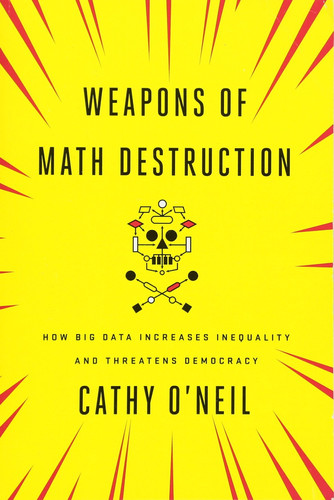
Positives Reviewers widely praise the book for its timely and important examination of how big data and algorithms increasingly influence our lives, often with unintended negative consequences. Many found it insightful and relevant, offering a detailed look at how these systems, despite promises of fairness and efficiency, can exacerbate societal divides and create opaque structures that are difficult to challenge. The book is lauded for its accessible approach, making complex ideas understandable for a broad audience, including those without a technical background. It provides thoughtful explorations of various domains - such as college admissions, criminal justice, and employment - where algorithmic decisions can perpetuate inequities and social stratification. Readers appreciated its role in raising awareness and fostering critical thinking about the pervasive and potentially destructive nature of unchecked algorithmic power.
Negatives However, the book also drew criticism, particularly from readers with a background in data science or those seeking deeper analysis. Some reviewers felt it offered a surface-level overview, akin to a compilation of widely known examples, rather than a profound technical dive into the mathematics behind the algorithms. Critics noted a lack of specific data, strong academic citations, or detailed context on how machine learning typically operates, which left experts wanting more. The proposed solutions were sometimes perceived as impractical, idealistic, or unfocused, leading to accusations of "fear-mongering" without offering realistic paths forward. Additionally, some felt the author's arguments occasionally veered into tangents or attributed societal problems solely to algorithms, overlooking deeper systemic issues or the potential positive aspects of data science.
Conclusion Ultimately, the book is regarded as an important contribution to the public discourse on technology and society, effectively highlighting the ethical concerns and societal dangers of blindly trusting algorithmic decisions. While it may not satisfy those seeking rigorous technical detail or groundbreaking solutions, its accessibility makes it a valuable resource for general readers, high school and college students, and anyone curious about the profound impact of big data on their lives and democratic processes. It serves as a powerful call for greater transparency, accountability, and the injection of human values and moral imagination into the design and application of predictive models, encouraging vigilance and informed discussion about the kind of future we want to build with these powerful tools.