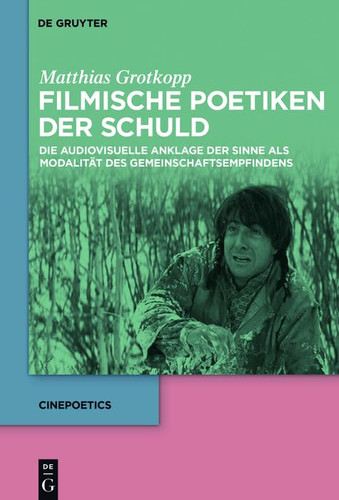
How do the flickering lights and resonant sounds of the cinematic experience forge and reshape the very core of a community's shared values? This profound inquiry delves into the intricate ways filmic images do not merely reflect, but actively generate and transform the affectively grounded structures that define a collective's moral horizon. It proposes that the temporal and dynamic patterns inherent in media forms and practices are potent architects of complex constructions of meaning, identity, and value within a given society.
At the heart of this exploration lies the feeling of guilt, not as a mere individual psychological burden or an external mechanism of social control, but as a paradigmatic lens through which to comprehend politics and history themselves, rooted deeply in embodied affectivity and shared relations to the world. The work unveils how the aesthetic modulation of moral sentiments can be meticulously described as a "calculus" of audiovisual staging techniques, where every visual composition and sonic texture contributes to a carefully orchestrated emotional architecture.
Imagine the stark black and white of German Post-War cinema, where shadows lengthened over a nation grappling with an immense, collective burden. Here, the filmic poetics of guilt are laid bare, revealing how these narratives worked to reorganize and confront a profound sense of shared culpability, shaping a new understanding of communal responsibility in the aftermath of catastrophe. The visual language, the pacing, the very rhythm of these films, crafted a space for a society to process and integrate an affect of irreversibility, forging new patterns of world experience.
Then, turn to the sweeping vistas and moral ambiguities of the Hollywood Western, or the harrowing immediacy of Vietnam War films. In these genres, the audiovisual accusation takes on different forms, exploring guilt through narratives of conquest, justice, and the profound moral compromises of conflict. The staging techniques, from the hero's solitary gaze to the cacophony of battle, are meticulously analyzed to show how they contribute to an affective calculus, influencing how a political community surveys, confirms, or revises its values in the face of its own historical actions.
Finally, the lens shifts to contemporary films addressing climate change, where the feeling of guilt transcends national borders and historical events to encompass a global, future-oriented responsibility. Here, the audiovisual modes of address model feelings of collective accountability for environmental degradation, weaving together a sense of shared fate and urging a re-evaluation of humanity's place within the natural world. These films, through their specific compositional patterns, actively work on the conditions of possibility for a global political community, shaping its historicity in the face of an uncertain future.
Ultimately, this journey through cinematic landscapes reveals that audiovisual staging is far more than mere storytelling; it is a profound cultural practice that actively constructs and modulates our moral feelings. It is through this intricate "calculus of affect" that films contribute to the very foundation of political communities, influencing their self-perception, their moral compass, and their historical trajectory, leaving audiences with a lingering, often uncomfortable, yet vital, conscience.