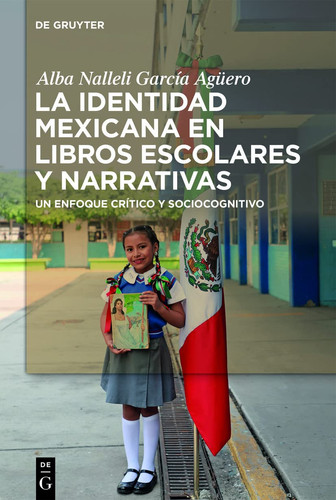
The construction of national identity, a complex and often deliberate process, finds a fertile ground for examination within the pages of Mexico's free primary school textbooks. These manuals, distributed by the government as obligatory educational texts to all Mexican children since 1960, serve as a potent instrument for instilling a shared model of national identity. This investigation embarks upon an analysis of the discursive strategies employed in shaping this idealized cognitive model of Mexican national identity (MCI) across four distinct generations of these foundational texts, spanning from 1960 to 2009. The inquiry seeks not only to trace the evolution of this MCI but also to discern the extent to which it resonates and manifests within the personal narratives of individuals who were educated with these very books.
The exploration unfolds through a rigorous interdisciplinary lens, drawing upon the robust frameworks of Cognitive Linguistics, Critical Discourse Studies with a sociocognitive orientation, and Social Semiotics. The initial phase of this study meticulously dissects the multimodal elements - both iconic and verbal - present within the textbooks. Each image, every turn of phrase, is scrutinized for its contribution to the overarching narrative of Mexican identity, revealing the subtle and overt mechanisms through which a collective self-image is meticulously crafted and disseminated to young minds.
A significant portion of the endeavor is dedicated to a diachronic and contrastive analysis, examining four specific generations of first-grade primary textbooks: 1960-1971, 1972-1980, 1981-1993, and 1994-2009. This temporal sweep allows for an understanding of how the conceptualization of Mexican identity has shifted, adapted, or remained steadfast across different political and social eras. It illuminates the enduring themes and the emergent ideas that have characterized the official discourse on national belonging over nearly half a century.
Beyond the textual analysis, the investigation delves into the lived experience of these constructed identities through an empirical study. This second, crucial part of the research relies on semi-structured interviews with individuals who studied using these specific textbooks. Their narratives become a vital counterpoint, offering insights into how the idealized cognitive models presented in their childhood education were internalized, negotiated, or even challenged in their personal understanding of what it means to be Mexican.
The confluence of linguistic analysis and narrative inquiry provides a comprehensive understanding of the mechanisms of identity formation. It moves beyond a mere content analysis to explore the deeper cognitive structures that underpin national consciousness, as fostered by state-sanctioned educational materials. This approach distinguishes itself from studies rooted purely in anthropology, historiography, sociology, or educational sciences, by anchoring its findings firmly in linguistic and sociocognitive perspectives. The critical analysis, particularly with the innovative application of cognitive linguistic tools, opens up a virtually uncharted territory in the field of discourse studies in Spanish, revealing the profound and often subtle ways in which language shapes collective self-perception.