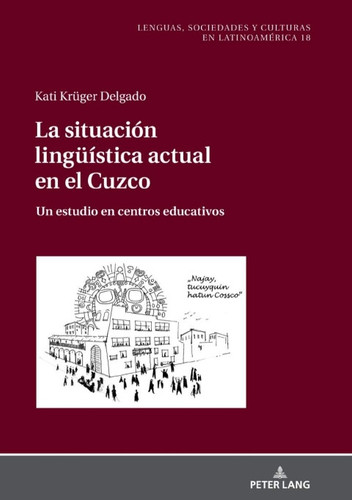
In the heart of Cuzco, a vibrant linguistic tapestry unfurls, woven with threads of ancient heritage and modern influence. Here, two powerful languages, Spanish and Quechua, dance in an intricate, often asymmetrical, embrace. One feels the enduring presence of Quechua, a language not merely spoken but lived, deeply entwined with the very soul of the Andean people, while the pervasive reach of Spanish asserts its societal dominance.
Quechua in Cuzco is far more than a means of communication; it is a profound wellspring of identity. It resonates with the sacred echoes of religion, the vibrant narratives of folklore, and the steadfast traditions that have shaped generations. To speak Quechua here is to connect with a collective memory, a shared consciousness that binds individuals to their cultural roots and the rich Andean worldview. This language breathes life into customs, beliefs, and social practices, creating a unique way of interpreting the world around them.
Yet, this living linguistic presence carries an inherent ambivalence. Despite its deep cultural resonance, Quechua navigates a complex social landscape where its standing is often juxtaposed against the hegemonic power of Spanish. The reality of Peru's linguistic situation is one of an uneven coexistence, where the prevailing status of languages is dictated by political, social, and geographical factors.
Within the very spaces designed for learning - the educational centers of Cuzco - this linguistic dynamic is particularly pronounced. Here, the true extent of Quechua's presence, often underestimated by broader societal narratives, becomes vividly apparent. The study of this environment delves into the subjective experiences of speakers, exploring how language manifests in their daily lives and shapes their perceptions.
Many find themselves caught in a struggle, grappling with the desire to preserve their ancestral tongue as a cornerstone of their identity and cultural heritage, against the mounting pressure to shift towards Spanish. This dominant language permeates most spheres of public life, leading to negative attitudes and even discriminatory acts against those who speak Quechua or whose Spanish carries its distinct morphosyntactic and phonological features. In higher education, a significant portion of students who arrive as Quechua-Spanish bilinguals regrettably choose to abandon their mother language, fearing it might hinder their Spanish proficiency.
This linguistic tension is not new; it is a narrative stretching back centuries to the Spanish conquest, which relentlessly sought to suppress indigenous languages. Yet, Quechua has proved resilient, enduring through oral traditions and the unwavering determination of its communities. Its influence is so profound that it has even shaped regional Spanish, giving rise to distinct Andean variations where Quechua sounds and syntax are subtly woven into the fabric of the colonizer's tongue.
To truly understand Cuzco is to grasp this intricate linguistic reality - a vibrant, yet challenging, coexistence where Quechua, though facing formidable pressures, continues to assert its vital role in the cultural identity of a people. It is a testament to the enduring spirit of a language that refuses to be silenced, echoing through the valleys and mountains, a constant reminder of a rich and powerful heritage.