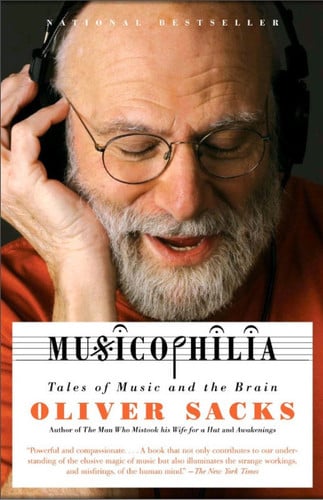
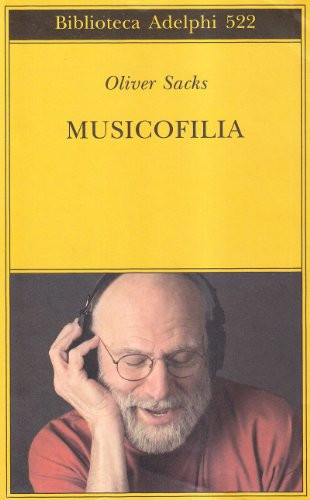
We are creatures profoundly, inexplicably, and universally moved by music. It weaves itself into the very fabric of our being, a phenomenon so deep-seated that it often defies rational explanation. From the most complex symphonies to the simplest melodies, music stirs us, heals us, and sometimes, haunts us, revealing the astonishing intricacies of the human brain.
Consider the orthopedic surgeon, struck by lightning, who awakens to an insatiable passion for Chopin, his mind suddenly alight with compositions he feels compelled to bring into the world, despite no prior musical inclination. Or the elderly woman, profoundly deaf, who nonetheless hears ceaseless musical hallucinations, entire orchestras playing vividly in her inner ear, a phantom symphony that both comforts and confounds. These are not mere curiosities but profound windows into the brain's extraordinary capacity for musical experience, even when the external pathways are compromised.
The spectrum of musicality is vast and often surprising. There are those for whom music is a cacophony, a jumble of noise devoid of rhythm or melody - a condition known as amusia, where the very grammar of music remains unintelligible. Yet, at the other end, we encounter individuals with Williams syndrome, often intellectually challenged in many areas, who possess an innate and profound musicality, sometimes singing opera in multiple languages or displaying perfect pitch with effortless grace. This suggests that musical ability does not always align with general intelligence, hinting at dedicated neural pathways for its processing.
Music's power extends beyond mere perception; it can profoundly influence memory and movement. We witness the heartbreaking case of Clive Wearing, whose memory is shattered by viral encephalitis, leaving him in a perpetual present, unable to recall anything for more than moments. Yet, place him before a piano, and his fingers dance across the keys, flawlessly performing complex pieces, or he conducts with precision and passion, his musical memory miraculously preserved. For those afflicted with Parkinson's disease, whose movements are frozen and chaotic, music can unlock their bodies, allowing them to walk, dance, or move with a fluidity otherwise impossible, the rhythmic pulse acting as an external pacemaker for their internal world.
Even in the profound decline of Alzheimer's and other dementias, when identity seems to recede into an impenetrable fog, music often remains a potent key. A familiar song can momentarily resurrect long-lost memories, bring a flash of recognition to dulled eyes, or evoke a surge of emotion that connects individuals to their past and to those around them. It becomes a lifeline, a way to reclaim, if only for a fleeting moment, the self that seemed lost.
But music is not always a benevolent force. Catchy tunes, known as "earworms," can replay endlessly in the mind, an involuntary loop that can become maddeningly persistent. And for some, music can even trigger seizures, a phenomenon called musicogenic epilepsy, where specific notes or melodies act as an unwelcome spark in the brain's delicate circuitry.
Ultimately, these tales reveal that music is not just an aesthetic pleasure, but a fundamental human necessity, deeply intertwined with our neurology, our emotions, and our very identity. It is a testament to the brain's astonishing plasticity and its enduring capacity for adaptation, resilience, and healing, reminding us that we are, in our essence, a musical species.