
Add to library
You don't have any lists yet. Create one in My Library.
Go to My LibraryAdd to library
You don't have any lists yet. Create one in My Library.
Go to My LibraryMusicophilia
- Language
- English
- Published in
- Publisher
- Random House Audio
- ISBN
- 9780739357408
Discover cases of musical hallucinations that persist ceaselessly, the phenomenon of absolute pitch, and the challenges faced by those with amusia, for whom a symphony may sound like noise. Through these diverse neurological experiences, the book illuminates music's power to heal, haunt, and organize the mind, offering insight into our innate connection to sound and rhythm.
Subjects
Original edition details
Other editions (35)

Musicophilia Tales of Music and the Brain
2008 • Knopf Doubleday Publishing Group
English

نزعة إلى الموسيقى حكايات الموسيقى الدماغ
2010 • الدار العربية للعلوم
Arabic

Muzikofilija : price o muzici i mozgu
2010 • Clio
Serbian

Müzikofili müzik ve beyin öyküleri : inceleme
2014 • Yapı Kredi Yayınları
Turkish

Musicophilia
2007 • Books on Tape
English
Other editions
Musicophilia Tales of Music and the Brain
2008 • Knopf Doubleday Publishing Group
English
نزعة إلى الموسيقى حكايات الموسيقى الدماغ
2010 • الدار العربية للعلوم
Arabic
Muzikofilija : price o muzici i mozgu
2010 • Clio
Serbian
Müzikofili müzik ve beyin öyküleri : inceleme
2014 • Yapı Kredi Yayınları
Turkish
Musicophilia
2007 • Books on Tape
English

Musicophilia la musique, le cerveau et nous
2009 • Éditions du Seuil
French

Musicophilia: tales of music and the brain
2007 • Knopf
English

Musicofilia (Gli Adelphi Vol. 377) (Italian Edition)
2014 • Adelphi
Italian

Musicophilia la musique, le cerveau et nous
2014 • Points
French

Musicophilia: Tales of Music and the Brain
2011 • Picador USA
English
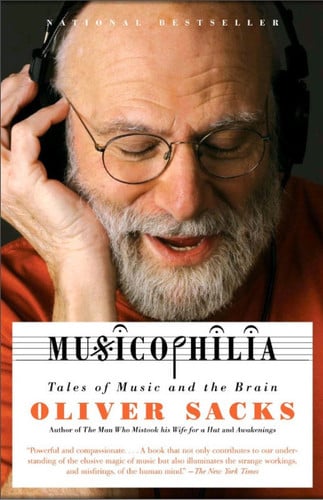
Musicophilia: Tales of Music and the Brain
2008 • Vintage Canada
English

Musicophilia: Tales of Music and the Brain
2008 • Vintage
English

Musicophilia
2010 • Pan MacMillan
English

Musicophilia: Tales of Music and the Brain
2007 • Knopf Canada
English

Musicophilia: Tales of Music and the Brain
2007 • Books on Tape
English

Musicophilia Picador Classic
2018 • Pan Macmillan
English

Musicofilia racconti sulla musica e il cervello
2008 • Adelphi
Italian
Musicophilia
2012 • Picador
English

Musicophilia
2008 • Vintage
English

Musicophilia: Tales of Music and the Brain
2007 • Random House Audio
English

Musicophilia: Tales of Music and the Brain
2008 • Picador
English

Musicofilia relatos de la música y el cerebro
2015 • Anagrama
Spanish

Musicophilia: Tales of Music and the Brain
2007 • Random House Audio
English

Musicofilia
2010 • Adelphi
Italian

Der einarmige Pianist über Musik und das Gehirn
2009 • Rowohlt Taschenbuch Verlag
German
Musicophilia
2019
English

Musicofilia Relatos de la música y el cerebro
2009 • Editorial Anagrama S.A.
Spanish

نزعة الى الموسيقى
2010 • Arab Scientific Publishers
Arabic

Alucinações musicais relatos sobre a música e o cérebro
2007 • Companhia das Letras
Portuguese
Musicophilia Tales of Music and the Brain
2008 • Picador
English

Musicophilia: Tales of Music and the Brain
2025 • Pan Macmillan
English

Muziḳofilyah: sipurim ʻal muziḳah ṿeha-moaḥ
2009 • Maḥbarot le-sifrut
Hebrew
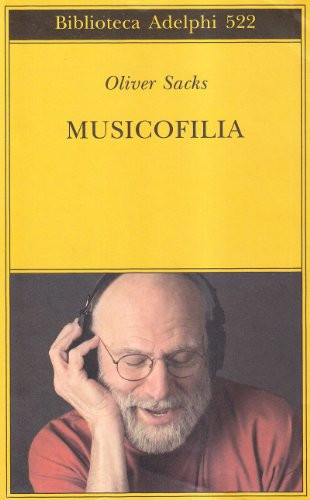
Musicofilia
Adelphi
Italian

音楽嗜好症(ミュージコフィリア) 脳神経科医と音楽に憑かれた人々
2014 • 早川書房
Japanese

脑袋里装了2000出歌剧的人
2016 • 中信出版集团股份有限公司
Chinese
Consider the orthopedic surgeon, struck by lightning, who awakens to an insatiable passion for Chopin, his mind suddenly alight with compositions he feels compelled to bring into the world, despite no prior musical inclination. Or the elderly woman, profoundly deaf, who nonetheless hears ceaseless musical hallucinations, entire orchestras playing vividly in her inner ear, a phantom symphony that both comforts and confounds. These are not mere curiosities but profound windows into the brain's extraordinary capacity for musical experience, even when the external pathways are compromised.
The spectrum of musicality is vast and often surprising. There are those for whom music is a cacophony, a jumble of noise devoid of rhythm or melody - a condition known as amusia, where the very grammar of music remains unintelligible. Yet, at the other end, we encounter individuals with Williams syndrome, often intellectually challenged in many areas, who possess an innate and profound musicality, sometimes singing opera in multiple languages or displaying perfect pitch with effortless grace. This suggests that musical ability does not always align with general intelligence, hinting at dedicated neural pathways for its processing.
Music's power extends beyond mere perception; it can profoundly influence memory and movement. We witness the heartbreaking case of Clive Wearing, whose memory is shattered by viral encephalitis, leaving him in a perpetual present, unable to recall anything for more than moments. Yet, place him before a piano, and his fingers dance across the keys, flawlessly performing complex pieces, or he conducts with precision and passion, his musical memory miraculously preserved. For those afflicted with Parkinson's disease, whose movements are frozen and chaotic, music can unlock their bodies, allowing them to walk, dance, or move with a fluidity otherwise impossible, the rhythmic pulse acting as an external pacemaker for their internal world.
Even in the profound decline of Alzheimer's and other dementias, when identity seems to recede into an impenetrable fog, music often remains a potent key. A familiar song can momentarily resurrect long-lost memories, bring a flash of recognition to dulled eyes, or evoke a surge of emotion that connects individuals to their past and to those around them. It becomes a lifeline, a way to reclaim, if only for a fleeting moment, the self that seemed lost.
But music is not always a benevolent force. Catchy tunes, known as "earworms," can replay endlessly in the mind, an involuntary loop that can become maddeningly persistent. And for some, music can even trigger seizures, a phenomenon called musicogenic epilepsy, where specific notes or melodies act as an unwelcome spark in the brain's delicate circuitry.
Ultimately, these tales reveal that music is not just an aesthetic pleasure, but a fundamental human necessity, deeply intertwined with our neurology, our emotions, and our very identity. It is a testament to the brain's astonishing plasticity and its enduring capacity for adaptation, resilience, and healing, reminding us that we are, in our essence, a musical species.
No discussions yet for this book.
Delete Discussion
Are you sure you want to delete this discussion? This action cannot be undone.
Rating Sources
The reviews consistently praise Oliver Sacks' Musicophilia for its utterly fascinating exploration of the intricate relationship between music and the human brain. Readers are captivated by the wealth of absorbing and often astonishing case studies, drawn from Sacks's extensive clinical experience as a neurologist. These include accounts of individuals experiencing musical hallucinations, sudden musical aptitudes after incidents, savants with extraordinary musical memory, and the profound impact of music on patients with conditions like Williams Syndrome, dementia, and amnesia. Many reviewers highlight Sacks's warm, sympathetic, and humanistic approach, which allows him to tell affecting stories while revealing the hope and resilience of his subjects. His writing is often described as clear, genial, and highly readable, making complex neurological phenomena accessible to a general audience and offering deep insights into the therapeutic power of music to connect, invigorate, and even restore individuals.
Despite the book's strengths, some reviewers expressed reservations, primarily concerning its structure and depth. A common criticism is the repetitive nature of the anecdotes, with many feeling that numerous similar case studies were presented without sufficient analytical progression or a strong overarching thesis. This led to the book being described as disjointed, lacking focus, and occasionally boring for some readers who desired a more cohesive narrative or deeper scientific explanation. While Sacks's storytelling is lauded by many, others found his writing style could be dry or overly anecdotal, with insufficient exploration of the underlying neuroscience. Additionally, a few readers noted a heavy reliance on classical music examples, wishing for a broader discussion of popular musical genres, and some felt Sacks occasionally reused cases from his previous works.
Musicophilia emerges as a compelling and thought-provoking read, particularly for those intrigued by the mysterious and often miraculous connections between music and the brain. While some readers may find the anecdotal style repetitive or desire more in-depth scientific analysis, Sacks's profound humanity and his ability to present extraordinary neurological conditions with compassion make the book a unique contribution. It is highly recommended for readers who appreciate an accessible, case-study driven exploration of the brain's musical capacities, its pathologies, and music's remarkable therapeutic potential. Individuals interested in pop science, creative non-fiction, or simply curious about the myriad ways music shapes human experience will likely find this book incredibly interesting and unforgettable.
No reviews yet. Be the first to review this book!
Delete Review
Are you sure you want to delete this review? This action cannot be undone.


