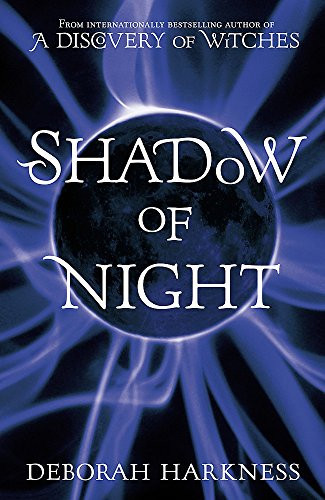
Positives Readers frequently praise the book for its exceptionally rich and immersive historical setting, as the main characters travel back to Elizabethan England and other parts of 16th-century Europe. Many found the detailed descriptions of daily life, fashion, architecture, food, and culture to be captivating, effectively transporting them to the past. The integration of numerous historical figures, such as Christopher Marlowe, Queen Elizabeth I, and Walter Raleigh, was highlighted as a creative and engaging aspect, bringing these personalities vibrantly to life within the fantasy narrative. For fans, the book offered a deeper exploration of the main characters' backstories and a significant development in their romantic relationship, showcasing their growth as a couple as they navigate the challenges of a different era. The evolution of Diana's magical abilities and the introduction of compelling new secondary characters were also cited as strong points, alongside an overall sense of emotional depth.
Negatives Conversely, a significant portion of readers expressed frustration with the book's slow pacing, often describing it as overly long and feeling that very little plot progression occurred for hundreds of pages. Many found the extensive historical detail, while appreciated by some, to be excessive and distracting, leading to a sense of "name-dropping" that overshadowed the main storyline. Criticisms were also leveled at character inconsistencies and a perceived lack of depth, with some reviewers finding the protagonists' actions illogical or their development stagnant. The mechanics of time travel were a frequent point of contention, with many finding the rules inconsistent or illogical, leading to plot holes. Additionally, some felt there were too many extraneous characters who did not contribute meaningfully to the narrative, and that the writing style occasionally suffered from repetitive descriptions or a perceived lack of editorial oversight.
Conclusion Ultimately, this book garnered a mixed reception, with strong opinions on both ends of the spectrum. Those who enjoyed the first installment and appreciate deeply researched historical fantasy, character-driven narratives, and a focus on relationship development are likely to find this sequel satisfying. However, readers seeking a fast-paced plot, consistent logical frameworks for fantasy elements, or tight editing may find themselves struggling with its length and deliberate pace. It is best suited for those willing to immerse themselves in a meticulously crafted historical world, even if it means sacrificing some narrative urgency, and who are invested in the intricate personal journeys of the main characters.