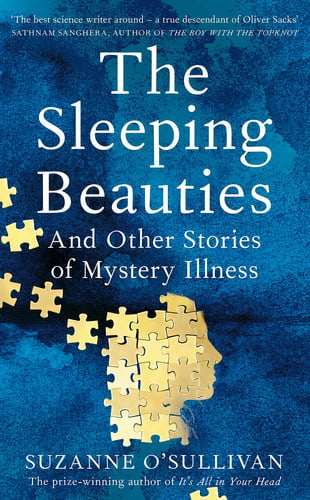
In the quiet corners of the world, and sometimes in its bustling centers, strange illnesses take root, defying easy explanation and challenging the very bedrock of our understanding of sickness. We begin in Sweden, where a profound stillness has fallen over hundreds of asylum-seeking children, some as young as seven. They are the "sleeping beauties," children afflicted with resignation syndrome, a condition that renders them unresponsive, bedridden for months or even years. Their tiny bodies lie inert, fed by tubes, growing from childhood into adolescence within their beds, yet medical tests reveal no underlying organic disease. Their plight, a haunting manifestation of trauma and lost hope, forces us to confront how deeply the mind can govern the body, and how society often fails to acknowledge suffering without a clear physical cause.
Our journey continues, taking us to a former Soviet mining town in Kazakhstan, where a mysterious sleeping sickness once gripped the community. People would simply fall into prolonged slumbers, a phenomenon that baffled experts and left residents fearing an unseen poison. Yet, in the unraveling of this enigma, we find that the illness was not simply a physical affliction, but a complex response, almost a necessary solution, to deep-seated social problems, a way for a community to express its profound distress.
Further south, along the Miskito Coast of Central America, a different kind of mystery unfolds with "grisi siknis." Here, individuals, often young women, are seized by episodes of screaming, hallucinations, and violent outbursts, sometimes believing themselves possessed. These dramatic events, deeply embedded within the cultural fabric of the Miskito people, are not dismissed as mere delusion but are understood through a unique lens that intertwines spiritual belief with physical manifestation, highlighting how cultural context shapes the very presentation and interpretation of illness.
Then there is the perplexing case of the "Havana syndrome," affecting diplomats and their families in Cuba. After hearing strange, directional noises, individuals reported a constellation of symptoms: headaches, dizziness, memory loss, and cognitive difficulties. Despite extensive investigation, no definitive cause was found. This phenomenon, like others, prompts us to consider how collective anxiety, environmental factors, and the power of suggestion can coalesce to create real, debilitating symptoms, even in the absence of a discernible pathogen or injury.
We also encounter a young woman who, after a minor injury, slowly began to unlearn the very act of walking. Her legs felt alien, her movements disrupted, until she became entirely dependent on others. Her struggle was not born of a hidden stressor in her past, but a maladaptive response to pain, a cycle of fear and avoidance that rewired her body's automatic processes. Her story underscores that psychosomatic symptoms are not "all in the head" in a dismissive sense, but rather complex functional disorders where the nervous system's wiring goes awry, requiring specific interventions to retrain the body and mind.
These disparate stories, from contagious seizures in an upstate New York high school to the quiet suffering of refugee children, are bound by a common thread: they are all manifestations of functional neurological disorders, illnesses where the symptoms are undeniably real and profoundly disabling, yet lack the clear-cut biological markers that Western medicine often demands. They challenge our ingrained prejudices, forcing us to recognize that suffering without a visible lesion is still suffering, and that the mind, body, and the surrounding culture are inextricably linked in the genesis and experience of illness. The question then arises, who truly holds the authority to define what constitutes an illness, and how can we expand our compassion and understanding to embrace these often-stigmatized conditions?