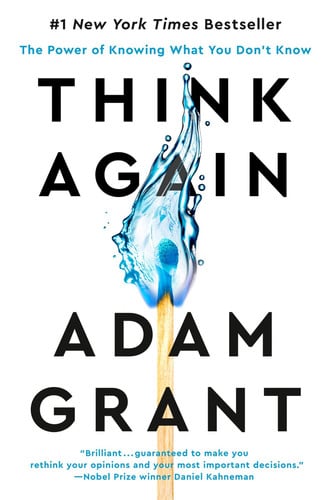
Positives The book is widely praised for its engaging and accessible writing style, making complex psychological concepts digestible for a broad audience. Many reviewers highlight its timely and important message about the necessity of rethinking one's beliefs in a rapidly changing world. The author is commended for promoting intellectual humility, encouraging readers to question their own convictions, and embracing the idea that being wrong is a fundamental part of learning and growth. Readers appreciate the numerous compelling examples, interesting studies, and relevant stories that illustrate the benefits of adopting a "scientist's mindset" – one of curiosity, experimentation, and a constant pursuit of truth. The book also offers practical advice on improving interpersonal communication, fostering constructive dialogue, and creating environments that encourage continuous learning and adaptability.
Negatives Despite its positive reception, some reviewers found the book's central themes to be obvious, amounting to little more than common sense or motivational platitudes. Critics argue that the book lacks novelty, particularly for those already familiar with psychological research, critical thinking, or other self-help literature. Concerns were raised about the scientific rigor of some studies cited, with claims that they were poorly designed or misinterpreted. Reviewers also noted instances of "hindsight bias," where the author appeared to analyze past events with the benefit of perfect information, rather than providing actionable tools for foresight. A few felt the advice was too vague or impractical, and some perceived the book as being written from a perspective that might not resonate with readers whose lived experiences already involve constant self-doubt or a need to prove themselves. Additionally, the book is criticized for not adequately addressing how to engage with individuals who argue in bad faith, suggesting an overly optimistic view of everyone's motivation for truth.
Conclusion Overall, the book serves as a valuable resource for initiating conversations around cognitive flexibility and the courage to change one's mind. It successfully champions the virtues of intellectual humility and open-mindedness, offering a framework for personal development and enhanced communication. However, its impact largely depends on the reader's prior exposure to these ideas. It is highly recommended for individuals who are new to concepts of cognitive biases, who tend towards overconfidence, or who seek inspiration to become more adaptable and effective communicators in both personal and professional spheres. Conversely, readers already deeply immersed in psychology, critical thinking, or self-improvement literature, or those looking for highly granular, specialized tools for complex societal challenges, might find parts of the book less groundbreaking or practical.