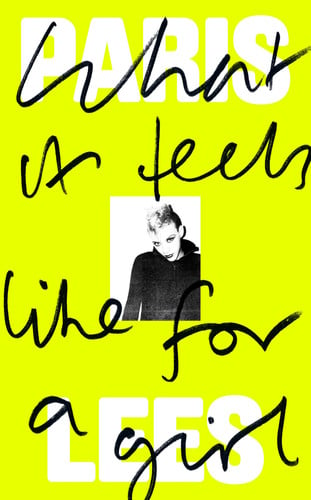
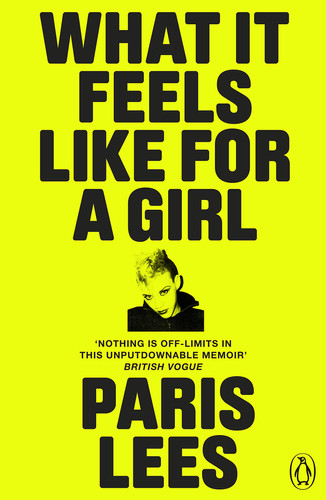
Growing up in Hucknall, Nottinghamshire, at the turn of the millennium, Byron knew from an early age that the world saw a boy, but inside, a girl was waiting to break free. Life in the "unbelievably borin'" town often felt like shuffling among the living dead, a stark contrast to the vibrant, insistent pulse of the girl Byron knew themselves to be. School was a battleground, where the taunts of "poof" and "bender" were as common as the beatings, and home offered little refuge from Gaz, a father whose idea of fatherhood involved constant challenges to Byron's "masculinity" and a heavy hand. Mam, meanwhile, had her own escape plans, eventually heading off to Turkey like a Shirley Valentine of the East Midlands.
Thirteen and desperate for an escape, Byron plunged headfirst into Nottingham's kinetic underworld. Madonna's "Music" reigned supreme, and the allure of hedonism was a siren song. It was here, amidst the smoky haze of nightclubs where you could still light up a cigarette, that a new kind of family emerged: The Fallen Divas. Lady Die, a mesmerizing podium-dancer-cum-hellraiser, became a guiding light, alongside characters like Sticky Nikki and Fag Ash, who offered a cocoon of friendship and laughter. In their orbit, Byron began to shed the skin of what society expected, embracing a self that was bold, defiant, and authentically theirs.
Yet, this newfound freedom came with a dark undercurrent. Byron found a way to make money, first in public toilets, then spiraling into a more exploitative sex work industry, a reality often glossed over by the intoxicating rush of the club scene. The easy money, a "tenner" for services, soon escalated, pulling Byron further away from any semblance of a conventional life. This path, laden with drugs and violence, eventually led to a desperate, coerced decision: a robbery that landed Byron in a young offenders' institution.
Inside, amidst the stark realities of confinement, a surprising transformation began to take root. Byron, who had entertained fellow prisoners with rude poems, found a different kind of ambition stirring. The desire for education, for a future beyond the cycle of the streets, took hold. It was a time for reflection, a period where the architecture of a new life started to be drawn. The yearning to be seen, truly seen, not just as a "boy" or a "poof," but as the girl they had always known themselves to be, solidified.
Upon release, Byron embarked on a new journey, shedding the old name and embracing Paris. The decision to transition, a profound act of self-acceptance, marked a pivotal shift. Armed with a fierce determination and a newfound clarity, Paris pursued education, completing A-levels and eventually studying English language at Brighton University. The sea view from a room of one's own, a symbol of independence and a future reclaimed, became a tangible reward for a past steeped in trauma, rebellion, and astonishing resilience. This was not just a story of survival, but of a vibrant, gobby, attention-seeking spirit insisting on joy and authentic selfhood against all odds.