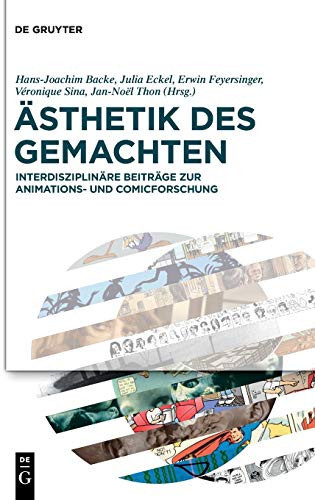
Across its pages, an intricate exploration unfolds, delving into the profound concept of the "aesthetics of 'made-ness'" within the realms of animation and comics. This collection of interdisciplinary insights poses a fundamental question: how do these distinct, yet often intertwined, media reveal their own artificiality, their very construction, to the viewer and reader? The inquiry centers on the deliberate exhibition of artistic practice and the underlying techniques that bring these visual narratives to life.
The discourse begins by asserting that both animation and comics, unlike purely indexical media such as photography or live-action film, inherently foreground their graphic, "hand-made" nature. The drawn lines of a comic strip or a cartoon, for instance, serve as a direct testament to the act of drawing itself, while the malleable figures in a stop-motion animation explicitly refer to the manual shaping and manipulation they undergo. Even the hyperrealistic and exaggerated characters of superhero comics or VFX cinema, despite their striving for verisimilitude, subtly (or overtly) betray their artificial origins.
A central argument posits that this displayed "made-ness" is not merely a byproduct but an active aesthetic strategy. Contributions examine how animation and comics frequently employ self-reflexive gestures that consciously disrupt the immersive experience. This can manifest in various forms: an author's presence within the story's world, explicit textual references to the production process, or even accompanying paratexts and documentation that lay bare the artistic labor involved. Such moments intentionally break the illusion, drawing attention to the text as a constructed artifact.
The volume meticulously unpacks the specific qualities, materialities, and aesthetics that define both media, seeking productive intersections where their research can converge. While acknowledging the obvious differences - for instance, how digital animation often strives to overcome visible artifice in pursuit of realistic simulation - the overarching focus on exhibited "made-ness" illuminates their shared artistic heritage and often manual origins. It highlights how both art forms, in their unique ways, reflect upon their own creation.
Specific analyses traverse diverse territories, from the gestural nuances in Pixar animation films to the productive and receptive dimensions of materiality in film. One compelling comparison explores the manga series "Kono sekai no katasumi ni" (In This Corner of the World) by Kouno Fumiyo alongside its anime adaptation by Katabuchi Sunao, revealing how the "made-ness" translates and transforms across different forms. The historical evolution of techniques, such as the performance of speed drawing, also comes under scrutiny, demonstrating how the very act of creation can become a spectacle.
Further explorations delve into the meta-narrative potential inherent in media convergence, particularly through concepts like the Japanese "kyara" (character), which transcends specific media forms. The book also casts a historical eye, examining comic production and aesthetics in the 19th century, tracing the roots of contemporary practices. Concepts of opacity and transparency are introduced to further refine the understanding of how these media reveal or conceal their construction.
Ultimately, this collection serves as a vital forum for interdisciplinary dialogue, bridging the gap between animation and comic research. It demonstrates that by focusing on the "aesthetics of 'made-ness'," scholars can uncover profound commonalities and nuanced distinctions, enriching our understanding of how these powerful visual narratives are conceived, crafted, and experienced. The diverse perspectives offer a comprehensive framework for analytically, aesthetically, and methodologically approaching the unique constitution of animated and drawn worlds.